The United States trademark registration is one of the most complex in the world. We know all the little tricks to register your US trademark quickly with the lowest risk of getting a complex objection.
With the many forms to navigate, you can trust our firm’s experience for your US trademark filing needs.
Important highlights about the US trademark registration process:
Your trademark is reviewed on absolute and relative grounds and it can be refused if there is a similar mark or if your mark is descriptive or deceptive.
There is a Supplemental Register in the US so if your trademark is descriptive or a common surname you can still register it (unlike in many other countries).
Trademarks on the Supplemental Register will NOT allow you to get in the Brand Registry on Amazon.
Objections are very common. The best way to minimize one is to do a proper trademark clearance search and file an application without any errors.
You need to submit proof of use for your products/services before your trademark registers; however, you can file a trademark based on an intent-to-use basis, aka “future use”.
Opposition period is only 30 days.
Trademark registration process is about 14-18 months if everything goes well.
Trademark registration process may take longer time especially if an objection is received or if applicant is unable to file a Statement of use in time.
Trademark Angel works with independent, experienced U.S.-licensed trademark attorneys who handle legal representation before the USPTO.
Our services include trademark searches, application preparation, filing coordination, responses to USPTO Office Actions, and post-registration maintenance, depending on the package selected.
We do not handle trademark oppositions, cancellation proceedings, enforcement disputes, or litigation. If your matter falls outside our scope, we can refer you to independent U.S. legal counsel.
Select a plan to start your Trademark Registration in USA
The prices are in USD$ for the US
SAIL THROUGH
$595
Covers filing your application and reporting the progress all the way to registration. 2 classes included. This is our entry-level package.
Preparation and filing of your application and reporting the progress to registration.
The maximum number of classes: 2. Our professional fees for each extra class are $100.
What’s not included:
Government fees, responding to examiner’s objections (office actions), the filing of a Statement of Use ($350 extra) or requesting extensions to file a Statement of use ($125 for each extension), opposition proceedings, free re-filing and additional extras that you get with the “ALL IN” package.
If an office action is received, you will be notified and provided with an estimate to respond based on our hourly rate. Where possible, we will try to give you a flat fee.
When to choose:
If your funds are limited and if our free US trademark search didn’t uncover any obstacles to registration. Also, this package is a good choice for trademarks already in use (i.e. if you already sell in the US as this will bypass the requirement of having to file a separate Statement of Use, which will cost you extra).
If our trademark search USA showed that there may be an objection that may need to be addressed.
If your trademark is very problematic and re-filing may be required.
If you want to include a lot of classes in your application.
If you haven’t started selling your products yet.
If your risk tolerance is low and you don’t want unexpected extra fees later.
What’s included:
Covers everything that is included in “SAIL THROUGH” package plus reporting and responding to non-substantive (procedural) office actions, filing of a Statement of Use with specimens provided by Client, if necessary, requesting extensions to file a Statement of use, and free re-filing if Client’s mark is refused by Trademarks Office.
Free re-filing will be done on our “SAIL THROUGH” package conditions – you will be responsible for government fees but we will waive professional fees. Check out our FAQ section for re-filing details.
The maximum number of classes: 2. Our professional fees for each extra class is $100.
Free-extras:
One company name/address change is included within 1 year of the invoice date. Applicable government fees are extra.
Reasonable consultations with Trademark Angel about your trademark matter (average value US$250).
What’s not included:
Government fees, substantive office actions, opposition proceedings and additional free extras that you get with “BELLS AND WHISTLES” package.
When to choose:
Most popular – this package gives you peace of mind and predictability of the budget. Also, this package is a good choice if you are filing for a brand new trademark not yet in use.
Why is it a better choice than “SAIL THROUGH” package:
We will deal with non-substantive office actions for free. Filing of a Statement of Use is also included in this package. In addition, if your trademark is refused, you will have an option to file for a different trademark and our professional fees will be waived!
Register Trademark in the US – Trademark Application US
File with confidence:
If your trademark is refused,
We’ll file another – fee excused.
What’s included:
Covers everything that is included in “ALL IN” package, including reporting and responding to all examiner’s objections and free re-filing.
Free re-filing will be on our “ALL IN” package conditions – you will be responsible for government fees but we’ll waive professional fees. Check out our FAQ section for re-filing details.
The maximum number of classes: unlimited.
Free-extras:
Address changes are included within 2 years of the invoice date. Applicable government fees are extra.
We will record one trademark assignment within 2 years of the invoice date (value US$350). Applicable government fees are extra.
Reasonable consultations with Trademark Angel about your trademark matter (average value US$350).
When to choose:
This package is also recommended if our trademark search uncovered some potential obstacles to your trademark registration.
Why is this package the best:
We will deal with all office actions for free. In addition, if your trademark is refused, you will have an option to file a different trademark and our professional fees will be waived! This package gives you complete peace of mind and predictability of the budget. Read more about this package and why it’s the best here.
File with confidence:
If your trademark is refused,
We’ll file another – fee excused.
Government fees are not included in our packages and are extra
Trademark registration in the US
The US government base application fee is US$350 per class when the application meets the applicable requirements and uses the pre-approved goods and services manual. At this fee level, Trademark Angel includes up to 15 goods/services items per class. This is our service allowance. If more than 15 items are requested, additional professional fees may apply.
If we use custom description (free-form text), the government fee is $550 per class. Each additional group of 1,000 characters in the free-form text box beyond the first 1,000 is $200.
If we file your application based on “intent to use”, then a Statement of use will need to be filed within 6 months after we get a Notice of Allowance for your trademark. Government fee to file a Statement of Use is US$150 per class per mark.
If you are not ready to file a Statement of use, then we may get an extension of time to file Statement of use. Government fee for an extension of time to file a Statement of Use is US$125 per class per mark. Up to 5 extensions of time may be obtained.
Possible additional fees
Our professional fee to file a Statement of Use under the SAIL THROUGH package is US$350 for up to two classes, plus US$75 for each class above two. The professional fee is included in ALL IN and BELLS AND WHISTLES. Government fees of US$150 per class are payable separately under every package.
Our professional fee to file an Extension of time to file Statement of use is US$125 with the purchase of our SAIL THROUGH package. We don’t charge anything extra if you select ALL IN or BELLS AND WHISTLES package.
Upgrades
Upgrade 1
$500
Upgrade “SAIL THROUGH” package to “ALL IN” package
What filing basis should I choose for my U.S. trademark application?
Every U.S. trademark application must include a filing basis. The filing basis tells the USPTO why you are entitled to apply for the trademark. Choosing the correct filing basis is important because it affects both the application process and when your trademark can be registered.
There are four principal filing bases.
1. Actual Use (Section 1(a))
If you are already using your trademark in U.S. interstate commerce, you can file based on Actual Use.
You will need to provide:
the date you first used the trademark anywhere;
the date you first used it in U.S. interstate commerce; and
a specimen (proof showing how the trademark is actually used with your goods or services).
If the application is approved, your trademark can proceed directly to registration.
2. Intent to Use (Section 1(b))
If you have not yet started using your trademark in the United States but have a genuine intention to do so, you can file under Intent to Use.
This filing basis allows you to reserve your rights and secure an earlier filing date before launching your products or services.
However, your trademark cannot register until you:
begin using the trademark in U.S. interstate commerce;
file a Statement of Use with an acceptable specimen; and
pay the applicable USPTO government fees.
For many businesses entering the U.S. market, this is the most common filing basis.
Intent to Use (Section 1(b)) is appropriate if you have not started using the trademark yet but have a genuine intention to do so in the near future. This allows you to secure an earlier filing date while you prepare to launch your business. However, your trademark will not register until you begin using it and file proof of use, called Statement of use, with the USPTO, together with the required government fees.
3. Foreign Application (Section 44(d))
If you filed a trademark application in another country within the last six months, you may be able to claim the filing date of that earlier application as your U.S. priority date.
This filing basis is available only if your country of origin is a party to a qualifying international treaty with the United States.
A Section 44(d) filing does not, by itself, result in a registration. Before your trademark can register, the application must ultimately rely on another filing basis.
For this reason, we generally recommend filing under both Section 44(d) and Section 1(b) (Intent to Use) whenever possible. This preserves your options and gives you greater
flexibility later in the application process.
4. Foreign Registration (Section 44(e))
If you already own a valid trademark registration in your country of origin, you may qualify to register your trademark in the United States under Section 44(e).
Generally, you must provide:
a copy of your foreign registration (and an English translation if necessary); and
evidence that the registration is valid and issued by your country of origin.
One of the major advantages of Section 44(e) is that you do not need to submit proof of use before your U.S. trademark registers.
However, after registration, you will still need to use the trademark in U.S. commerce in order to maintain your U.S. registration.
An important advantage for foreign applicants
Foreign applicants who qualify under Section 44(d) often enjoy greater flexibility than U.S. applicants.
By filing under both Section 44(d) and Section 1(b), you can decide later which path to registration is most advantageous:
If your foreign registration issues first, you can amend your application to Section 44(e) and obtain registration without filing a Statement of Use or proof of use.
If your foreign registration is delayed, you can instead proceed under Section 1(b) by filing a Statement of Use once you begin using your trademark in U.S. interstate commerce.
This flexibility allows many foreign applicants to choose the faster or more practical route as their application progresses.
Which filing basis is best?
The right filing basis depends on your individual circumstances, including whether you are already using your trademark, whether you have filed or registered your trademark in another country, and your future business plans.
When you instruct Trademark Angel to file a U.S. trademark application, we will review your situation and recommend the most appropriate filing strategy. Where available, we will help you take advantage of multiple filing bases to maximize flexibility and protect your rights.
Should I file my U.S. trademark application based on actual use or intent to use?
The correct filing basis depends on whether you are already using your trademark in U.S. interstate commerce.
Actual Use (Section 1(a)) is appropriate if you are already selling your products or providing your services under the trademark in U.S. interstate commerce. When filing, you must provide a specimen (proof of use) and the dates the trademark was first used.
Intent to Use (Section 1(b)) is appropriate if you have not started using the trademark yet but have a genuine intention to do so in the near future. This allows you to secure an earlier filing date while you prepare to launch your business. However, your trademark will not register until you begin using it and file proof of use, called Statement of use, with the USPTO, together with the required government fees.
If you are unsure which filing basis applies to your situation, we will help you choose the most appropriate option before filing your application.
What is a power of attorney? When do I need to sign a power of attorney?
A Power of Attorney, POA in short, is a legal document that authorizes an entity to represent or act for another person, usually, in the managing of the person’s property, business or private affairs. The former is called the Attorney or Agent whereas the latter is commonly known as the Principal.
In Trademarks, a Power of Attorney is required to appoint an Attorney on your file so he/she can represent you before the respective Trademarks Office.
Having said that, in many countries including the US, UK, Europe, Canada and Australia you don’t need to sign a POA for a standard trademark application (power of attorney is already implied when you entrusted your attorney/agent trademark registration). However, there are countries, such as, China, Mexico, Russia and India where a POA signed by the owner or any other person legally bound to the owner is required in order to file a trademark application.
In the US, when an applicant wishes to replace its existing attorney and appoint a new attorney, it needs to sign a Power of Attorney authorizing the new attorney to prosecute the trademark application.
Why should I file my US trademark application in a single class?
Especially with US trademarks, we usually recommend to file your trademark in a single class. Why?
It’s less expensive. Remember – government fees are paid per class. Government fees are paid during filing and then more fees may be paid if a Statement of use needs to be filed.
Single class applications are easier and faster to register. Since USPTO does a trademark search during the examination of your trademark, your mark may be found to be confusingly similar to any other marks. Therefore, the more classes you include, the more potentially close marks USPTO may find. For example, if an office action (aka objection) issues for a four-class application, registration of a whole trademark application may be significantly delayed even if the trademark owner is trying to overcome an objection for one class and the other three classes are acceptable and registrable.
A focused application can simplify preparation, examination and proof-of-use review. The number of classes should reflect the goods and services for which protection is needed. One class can contain several different products, each of which must satisfy the applicable use requirement.
For goods or services proceeding under Section 1(b), an acceptable allegation of use is required before registration. A smaller, focused goods/services list may make that step easier to complete. Other filing bases can have different requirements.
The more classes your application includes, i.e. the broader you file – the higher the risk of an opposition is. For example, a trademark that is filed for “note-pads; diaries” is going to be less problematic than a trademark filed for “note-pads”, “clothing”, “toys” and “kitchen utensils”.
A mandatory Section 8 or 71 declaration is due between the fifth and sixth anniversaries of US registration, followed by later maintenance filings at the ten-year stages. A six-month grace period is available with additional fees. Review every retained good or service before filing and identify items no longer in use.
Can I file my US trademark myself? Do I need a US attorney to file a US trademark application?
Since August 2019, all foreign applicants must be represented by a local US trademark attorney. What does it mean for you?
If you are not a US resident or if the applicant is a foreign company, you now need to appoint a US trademark attorney to file your trademark application.
If your trademark application was filed before August 2019, and there are some outstanding issues that must be addressed and USPTO sent you a letter after August 2019, you will be required to appoint a US trademark attorney when a response is filed.
Trademark Angel provides proper legal representation through a designated US trademark attorney.
You should generally not rush to file a U.S. trademark application in the following situations:
1. Your trademark is not available or has a high risk of refusal. Before filing, it is important to search for existing trademarks that may conflict with yours. Filing without checking availability can result in wasted government fees, legal costs, and potentially having to rebrand.
2. Your trademark is clearly descriptive or generic. A trademark that merely describes your products or services may be difficult or impossible to register. In some cases, choosing a more distinctive brand before filing is the better strategy.
3. Your trademark or slogan is merely informational and does not function as a trademark. Words or slogans that consumers are likely to understand as conveying an ordinary message, sentiment, or social or informational statement—rather than identifying the source of particular goods or services—may not be registrable as trademarks.
Examples include slogans such as ONCE A MARINE, ALWAYS A MARINE and BLACK LIVES MATTER, which may be viewed as informational messages rather than source identifiers.
4. You have not started using the trademark and do not genuinely intend to use it. The U.S. allows Intent-to-Use trademark applications, so you do not need to be selling products or providing services yet. However, you must have a genuine intention to use the trademark in U.S. commerce and will eventually need to prove qualifying use before registration.
5. Your business is purely local and there is no sufficient connection to commerce regulated by Congress. Federal trademark registration is based on federal commerce requirements. A business operating only within one state may need to consider whether its activities qualify.
However, this does not mean that every local restaurant, salon, store, or service business is automatically ineligible for federal registration. The analysis depends on the particular business and how it operates.
If federal registration is not currently appropriate, state trademark registration may be an alternative. If you expect your business to expand, sell online, serve customers outside your state, or otherwise develop interstate activity, federal registration may become the better option.
6. You are still seriously considering changing the brand. If the name or logo has not been finalized, it may make sense to complete your trademark search and branding decisions before filing.
Not sure whether you should file?
The fact that your business is new, small, or has not launched yet does not necessarily mean you should wait. Filing early can be valuable, particularly when you have selected your brand and genuinely plan to use it.
We recommend starting with a trademark search to identify potential problems and determine the appropriate filing strategy.
How does the process work with Trademark Angel? What happens after I buy a trademark package?
There are 3 ways how you can proceed:
Book an initial phone call with us. Here is the link for the trademark package
Ask for a free preliminary trademark search to get an initial indication of potential registration issues. This is a basic search only and is not a substitute for our comprehensive trademark search. Order your search here.
Buy a trademark package right away to start the trademark registration process without further delay. You can see our pricing onthis pageand can buy directly from our website.
What happens after I buy a trademark package?
We’ll confirm your order.
For packages in the US, Canada, UK, EU and Australia, we conduct the included comprehensive trademark search and assess the chances of registration. In other countries, comprehensive searches are purchased separately. Where a search identifies potential issues, we explain the risks and available filing options.
If your trademark is registrable, we’ll move forward with the trademark registration process.
If your trademark is found unregistrable after we conduct the comprehensive trademark search, you will have two options:1. Continue with your existing package and provide replacement trademarks. We will conduct additional searches without additional search fees until we identify the first registrable trademark; or2. If our comprehensive search finds your trademark unregistrable, you may either continue with the existing package and provide replacement trademarks for additional searches until we identify the first registrable trademark, or request a refund of the applicable package professional fee under our Terms of Engagement. A refund ends the package and any further searches.If your trademark is problematic but is not found unregistrable, we will explain the risks and available filing strategies. The refund option does not apply solely because a trademark has lower chances of registration.
As of August 3, 2019, the United States Patent and Trademark (USPTO) now requires foreign domiciled applicants (read: non-US applicants) and registrants to appoint a US attorney on all US trademark filings and representations before TTAB. We work with a few trusted US attorneys so can file and take over your recently filed trademark applications. If you filed yourself, we can take over your application and appoint a US licensed attorney, at no cost to you.
Since this is how we always filed, our fees remained the same unlike many other firms that increased their fees following the introduction of this new rule.
In every country where we file, a licensed attorney or trademark agents submits your trademark application so that you get proper legal representation.
What are geographically descriptive trademarks in the US?
Geographically descriptive trademarks are generally not registrable on the Principal Register in the US.
The USPTO attorney will use the following test to determine if a trademark is geographically descriptive:
The trademark is the name of a geographic location
The products or services come from the placed identified by the trademark or are made in the pace named in the trademark
Potential customer would be likely to believe that the products or services originate in the geographic place identified in the mark
However if the place is not known or very remote, the public is unlikely to make this association.
Tip: If your trademark is geographically descriptive, and you cannot change or add another word to make it not descriptive as a whole there is one trick you can do. In order to reduce the risk of getting an objection from the Trademarks Office it’s best to file a trademark that may be considered geographically descriptive as a combined logo (Meaning word mark plus an image).
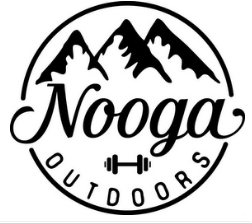
For example, NOOGA OUTDOORS was considered to be unregistrable on the ground that “NOOGA” is a commonly used nickname for Chattanooga, Tennessee and the term “OUTDOORS” does not diminish the mark’s primary geographic significance. However, the same trademark didn’t receive a geographically descriptive objection when it was filed a combined logo: because as a whole it was no longer just geographically descriptive as it also contained other graphic elements (mountains, dumb-bell and circle).
Likewise, MICHIGAN BRAIN HEALTH for medical clinic services would be considered geographically and overall descriptive but would be registrable on the Principal Register (with a disclaimer of “Michigan Brain Health”).
A trademark that will most likely be refused by the USPTO as being geographically descriptive and therefore not registrable on the Principal Register (and not eligible for Amazon Brand Registry) may go through in the UK.
We can help you to identify if your mark would be considered geographically descriptive and will help to make suggestions how to avoid this refusal.
Classification of Goods and Services in a Trademark Application (class headings)
Trademark Classes
Every trademark application must list the specific goods and services that the trademark will cover.
Products belong to trademark classes 1 to 34. Services belong to classes 35 to 45.
Products are tangible, you can touch them. Services are intangible.
Below is a rough classification (class headings) just to give you an idea of general categories (please note that the below list cannot be used for trademark filing)
Products
Class 1: Chemicals (including those used in agriculture, industry and science)
Class 2: Paints, coatings, varnishes, colorants for food.
Class 3: Cosmetics, creams and serums, cleaning products including soap and shampoo, bleaching and abrasives, non-medicated toiletry preparations, false eyelashes, essential oil, perfume
Class 4: Fuels, industrial oils, greases, lubricants, candles
Class 5: Pharmaceutical and veterinary products, food supplements and vitamins, baby food, disinfectants, fungicides, herbicides, plasters, dental wax
Class 6: Metals, metal castings, metal hardware, metal containers, locks, safes
Class 7: Machines and machine tools and their parts, motors and engines (except for land vehicles)
Class 8: Hand-operated tools and implements, razors, cutlery
Class 9: Computers, computer hardware, computer cables, cell phones and cell phone cases, data carriers, computer software, downloable publications including e-books, videos and podcasts
Class 10: Medical and dental instruments and apparatus, massage apparatus, sex toys
Class 11: Products for lighting, heating, steam generating, cooking, refrigerating, drying, ventilating, water supply and sanitary purposes including lamps and kettles
Class 12: Land, air and nautical vehicles, motors and engines for land vehicles
Class 13: Firearms, ammunition, explosives, fireworks, holsters
Class 14: Precious metals, watches, jewellery
Class 15: Musical instruments
Class 16: Paper, items made of paper, stationery products, artists’ products, printed products including photographs, stickers, notebooks, party ornaments of paper
Class 17: Rubber, asbestos and plastic Items, pipes and tubes
Class 18: Leather and leather goods, bags, wallets, animal apparel, collars and leashes for animals
Class 19: Building and construction materials (non-metallic), non-metal monuments
Class 20: Furniture, mirrors, picture frames, storage containers not of metal, party ornaments of plastic
Class 21: Kitchen utensils, crockery, containers, cleaning implements, toothbrushes
Class 22: Ropes and strings, tents, nets, awnings, sacks, padding, canvas material and raw fibrous textile material
Class 23: Yarns, threads
Class 24: Textiles, fabrics, blankets, covers, towels
Class 25: Clothing, footwear and headgear
Class 26: Sewing products, lace and embroidery, artificial flowers, hair decorations like ribbons, false hair
Class 27: Carpets, linoleum, wall and floor coverings, wall hangings
Class 28: Sports equipment, video game apparatus, games, toys, Christmas decorations
Class 29: Dairy products, meat and fish, processed and preserved foods, including dried, frozen and cooked fruits and vegetables, milk, eggs, edible oils and fats, jamps, jellies
Class 30: Staple foods, spices, bakery products, confectioneries, tea, coffee
Class 31: Fresh fruit and vegetables, live animals, animal food, seeds, fresh herbs, plants and flowers
Class 32: Non-alcoholic beverages, preparations for making beverages, fruit juices, beer
Class 33: Alcoholic beverages, except beer
Class 34: Tobacco products and smokers’ articles, matches, electronic cigarettes
Services
Class 35: Retail services including online retail store, advertising, business consulting, business management
Class 36: Insurance and financial services, real estate services
Class 37: Building construction, repair and maintenance services, installation services
Class 38: Telecommunication services, broadcasting services including video broadcasting
Class 39: Transport, logistics and storage, travel services
Class 40: Treatment of materials, custom assembly, recycling and waste management
Class 41: Education services, including arranging and conducting educational classes and seminars, entertainment services, book publishing, organizing exhibitions and conferences
Class 42: Saas and Paas services (Software as a service and platform as a service), IT services, software development, graphic design services, website development, scientific and technological services
Class 43: Restaurants, cafes, hotels, catering services
Class 44: Medical services, hygienic and beauty care services, dental services, veterinary services
Class 45: Personal and social services, legal services, security services
The team at Trademark Angel strives to make the trademark registration process as cost- and time-efficient and smooth as possible. For this reason, we offer to conduct a free trademark search for your proposed mark to give you an idea of how registrable your mark is in the country/countries you’d like to file.
We have talked extensively about benefits of doing an initial trademark search in other articles. In short, failing to search for similar marks prior to registration is quite risky and can result in additional business expenses that could have been avoided. For example, we have aided several clients who came to us after starting the process themselves, without conducting a thorough trademark search. These clients had already paid for products or packaging that displayed a mark that ultimately could not be registered as there were registered marks that were too similar to our clients’. These products and/or their packaging then had to be completely re-branded at great expense. This could have easily been avoided by an initial trademark search.
If the search results are positive and the mark looks registrable, we can start preparing your trademark application.
To help us prepare your application, we’ll need to know:
Who the trademark owner will be
If we are filing for your word mark or your logo (we usually make suggestions during the search)
What goods and/or services you’d like to include, and
If you’d like to file under intent to use of your mark or actual use of your mark
Intent to use vs Actual use
If you are already selling your goods or offering your services in the US, you can file for those goods and/or services under “actual use.” To prove your claim of actual use, you will need to provide what is called a specimen – in other words, an unedited photograph – which clearly shows your mark on the goods and/or services or the product packaging. A specimen is required for each class of goods/services you file for. In addition, you will need to provide the date of your first out-of-state sale if you are a U.S. citizen, or the date of your first sale in the U.S. if you are a non-U.S. citizen.
If you are filing for goods and/or services you plan to sell in the near future, you will file for those goods and/or services under “intent to use.” After your application has received a “Notice of Allowance” (see below), you will be required to file a Statement of Use attesting to the fact that you have started using your mark on all of the goods and/or services listed in your application.
The cost to file an application in the US depends on how many classes you would like to include in your application. The government filing fee is $350 per class, and is NOT included in our packages.
STEP 3
Filing your application
Next, your application will be filed with the USPTO and we will email you a confirmation of the filing. At this time, you will also receive a trademark application number. You can check the status of your application at any time on the USPTO website with this application serial number.
Please note, we cannot change the mark that you register for, or the goods listed in your application once you file. For this reason, the goods listed in your application must be an accurate description of your actual products. We will always send you a draft of how your application will be submitted and ask that you approve the draft prior to submission. We ask that you provide us with clarifications regarding your products if the descriptions we list are not accurate.
STEP 4
Examination
Approximately 6 months after your application is filed, the application will be assigned to an Examining Attorney at the USPTO. This Examining Attorney will make decisions whether your application can move on to the next step of the process.
Office action?
If the Examining Attorney finds that changes must be made to your application (for example, the description of your logo must be amended to be more clear, or to clarify certain goods and/or services included in your application), or that your mark is confusingly similar to another prior-filed mark or registered mark, an office action will be issued.
A response to the office action must be filed within 3 months of the date on which the office action has been emailed. An additional extension of time of 3 months can be obtained with a fee. The failure to respond to all of the changes required by the Examining Attorney will be considered an “incomplete” response and may jeopardize your application.
To read more about different types of office actions, please check out this article: What are office actions?
STEP 5
Publication
After office actions have been responded to and all outstanding issues have been resolved, the Examining Attorney will approve your mark for publication in the Official Gazette. This does not mean that your trademark has registered; rather, your mark will be published for potential third parties to oppose your mark if they believe your mark conflicts with one of their own marks.
Receiving an opposition is quite rare, but if this does occur, we will happily refer you to an attorney with extensive experience in this field.
If no oppositions are filed against your mark within the 30-day publication period, your mark will proceed to the next step in the registration process.
STEP 6
Allowance
If you filed your application based on an “intent to use,” approximately six weeks after the end of the publication period, your mark will receive a “Notice of Allowance.”
A Notice of Allowance indicates that your mark has been approved to proceed to registration pending the filing of a Statement of Use. The deadline to file this Statement of Use is six months from the mailing date of the Notice of Allowance.
Within this six-month period, you must prove to the USPTO, through the filing of a Statement of Use, that:
You are using your trademark on all of the goods and/or services listed in your application, and
Your mark is being used in commerce.
To accomplish this, you must provide:
Specimens – in other words, unedited photographs – of your product which clearly show the product and your mark on the product or the product packaging. You must provide at least one specimen per class listed in your application.
The date of your first out-of-state sale if you are a U.S. citizen, or the date of your first sale in the U.S. if you are a non-U.S. citizen. If you listed any services on your application, the relevant date would be the first date you offered those services.
The government fee to file a Statement of Use is $150 per class, per mark. In addition, if, for any reasons, you cannot file a Statement of Use within the six-month period following the issuance of the Notice of Allowance, you must file for an extension. Up to five extensions of six months each, can be obtained for any one mark. The government filing fee for an extension is $125 per class, per mark.
STEP 7
Registration
If you filed your application based on “actual use,” and your mark has not been opposed by any parties, you will receive a registration certificate with a new registration number for your mark approximately six weeks after the end of the opposition period.
If you filed your application based on “intent to use,” and you have filed a Statement of Use, and that Statement of Use has been accepted by the USPTO, your mark will proceed to registration. A registration certificate, with a new registration number for your mark, will issue approximately four to eight weeks after your Statement of Use has been accepted.
The whole process takes 8 months to over 2 years!
Best scenario – 8 months Worse scenario – 2 years or longer
To maintain a US national registration, file a Section 8 Declaration of Use between the fifth and sixth anniversaries of registration. Between the ninth and tenth anniversaries, and every ten years thereafter, file a Section 8 declaration together with a Section 9 renewal application. A six-month grace period is available with additional government fees.
Every retained good or service must be covered by actual use of the mark in US commerce unless a qualifying claim of excusable nonuse applies. One specimen per class is generally sufficient at filing, but every retained item must satisfy the use requirement. Plans to use the mark on a product or service in the future are insufficient. Identify all unused items before filing so they can be deleted without a USPTO deletion fee.
Section 15 is optional. It requires five consecutive years of qualifying post-registration use and satisfaction of the other legal requirements, and can strengthen eligible Principal Register registrations.
Electronic government fees
Section 8: US$325 per class.
Section 15: US$250 per class.
Combined Sections 8 and 15: US$575 per class covered by both.
Combined Sections 8 and 9: US$650 per class.
Section 8 grace-period surcharge: US$100 per class.
Combined Sections 8 and 9 grace-period surcharges: US$200 per class in total.
Professional fees are separate. Government fees can change.
Madrid-based US registrations require Section 71 filings instead. Their international registrations must also be renewed separately through WIPO with continued US coverage. The WIPO and US maintenance deadlines may differ.
Conclusion
As the trademark registration process in the U.S. can take over a year, we strongly suggest that you consider filing for your mark sooner rather than later. There have been instances where a client has waited to file for a mark until it was in “actual use,” and during that time, a competitor had filed for a similar mark. This forced our client to file for a different mark and to order new packaging reflecting this new mark.
For more information about registering your trademark, please take a look around our site, particularly the FAQ section. If you’re ready to file for your mark and begin the trademarking process, we are available via chat and email and look forward to working with you to protect your brand.
When deciding whether to file for either a word mark or logo, it is important to keep in mind that a logo must always be used as it is depicted in your application. In addition, if you file your logo in a particular color in the US, you must always use your logo in that particular color.
On the other hand, word marks are somewhat more flexible. When filed in all capital letters, word marks allow the trademark owner to display it in any combination of lower case and upper case letters.
For example, if you filed for the word mark TRADEMARK ANGEL ROCKS, you can use it on your goods and/or services as: trademark angel rocks, Trademark Angel Rocks, or TraDeMaRk AnGeL RoCkS.
The flexibility of a word mark ultimately makes it quite appealing as it is not limited to a particular font or color and can be displayed in a combination of upper and lower-case letters.
However, filing for a logo can be more advantageous in some situations.
For example, if your mark is found to be descriptive of your goods/services or uses generic words, your mark will generally be limited to the Supplemental Register. A distinct logo, however, can “carry” the mark to the Principal Register despite the descriptive nature of your mark.
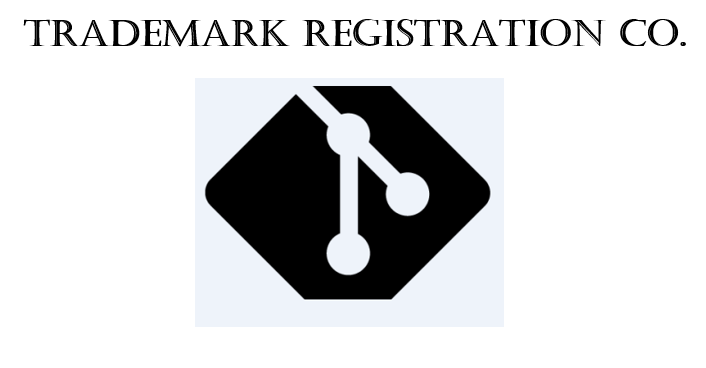
Let’s say you want to file for TRADEMARK REGISTRATION CO. for a company that offers trademark registration services. That’s a mark that is descriptive of the services offered, and will therefore would be limited to registration to the Supplemental Register. If this same mark was filed with a distinctive logo, for example:
Then, the logo could provide sufficient distinctiveness to allow registration of TRADEMARK REGISTRATION CO. onto the Principal Register (with a disclaimer for “TRADEMARK REGISTRATION CO.”).
Another situation when filing for a logo is advantageous is when there are similar marks. For example, a client wanted to register the mark HAWQUE with a design element of a flying hawk – for computer software connecting customers to security contractors, in Class 9. We advised that the logo will most likely be registrable but the wordmark alone would be too similar to marks containing the word HAWK providing similar products in the same class. Although we received an office action alleging that the HAWQUE logo mark was confusingly similar to a registered wordmark, HAWQ, that also covered Class 9 computer software, we were ultimately able to overcome the objection. Our client’s logo, HAWQUE, was successfully registered soon after.
In another case, a client wanted to register the mark ESTEEM APPAREL, either the word mark or the logo. However, in our initial search, we found a very similar, registered mark, ESTEEM CLOTHING. In this case, we advised that the logo would have a greater chance of registration. The client chose to file for the logo instead of the word mark and, although we received a confusion objection based on similarity with ESTEAM and ESTEEM CLOTHING marks, we were able to successfully able to overcome the objection and the mark was successfully registered.
Since the client protected the logo , he now cannot use Esteem Apparel side by side, without the image, in a different font or in ALL CAPITAL letters: ESTEEM APPAREL. On the other hand, if word mark had been filed – ESTEEM APPAREL, he could have used it in ALL CAPITAL LETTERS, in any font, side by side or one word above the other. Logo makes the trademark inflexible and you should not be making even small changes in your use.
In addition, in some cases, one has to file for a logo if the trademark is broken/separated by images or symbols. Please check our article that talks more about it.
Thus, as can be seen from the above examples, it is important to first determine if your mark is too descriptive to achieve registration in the Principal Register, and whether you intend to consistently display your logo on all of your products, prior to making a decision regarding whether to file for a word mark or a logo. Also, in case there are similar marks, filing for the logo may help to differentiate and ultimately achieve registration of your mark.
What are different types of names? Company name vs business name vs domain name vs trademark?
What is the difference between company name, business name, domain name and brand or trademark?
What are different types of company, domain, business or brand names? Let’s get the names straight to avoid confusion.
Company name: Legal name of the company, either registered federally or in a certain state (or province in Canada).
Example: Microsoft Corporation
Note: one company may own more than one brand and may do business under more than one name
Business name or doing business as: Name under which you conduct your business.
Example: Microsoft
Example: Skype
Domain name: Name of your address on the Web.
Example: www.microsoft.com
Example: www.skype.com (Microsoft owns Skype)
Trademark: A trademark may be one word, a combination of words, or logos (or even sounds and smells!) used to distinguish/differentiate your products or services from those of other entities.
Example: MICROSOFT, , or a combined mark:
Example: SKYPE,
Let’s take another example of a giant retailer Kraft Foods.
Company name: Kraft Foods Inc.
12 of Kraft Foods brands are sold worldwide: Cadbury, Jacobs, Kraft, Maxwell House, Milka, Nabisco, Oreo, Oscar Mayer, Philadelphia, Trident and Tang.
For each brand Kraft Foods has a website: cadbury.co.uk; cadbury.com.au; oreo.com; oscarmayer.com, etc.
Not everyone knows that these 12 famous brands are owned by the same giant! It doesn’t really matter, what matters is that everyone knows where do buy their favorite Cadbury chocolate or Oreo cookies and everyone knows how the Oreo cookies package looks like!
Do I need to register a trademark if my business incorporated?
If you simply business incorporate or register a corporate name, it doesn’t mean that the government approved for you to use the name as a trademark.
If we take a US LLC, as an example, every state has its own laws about business names.
You can register your LLC name in Delaware but the business name registration has no impact on the other 49 states.
In plain English, if you register Coolapples LLC in Delaware, another entity may register Coolapples LLC in Indiana. If you plan to expand nationwide or worldwide, trademark registration will provide that protection. A federal US trademark will give you exclusive rights to use your brand name for your products across the US. Likewise, a Canadian or Australian trademark will give you country-wide rights to use your chosen brand in your country and will make it easier for your to sell or license your trademark later.
Do I have to use my trademark in the US prior to filing? Do I have to use my trademark after registration?
You may file a US trademark application before use begins if you have a bona fide intention to use the mark and satisfy the requirements of the selected filing basis. A Section 1(a) application requires qualifying use when filed. A Section 1(b) application requires an acceptable allegation of use before registration. Applications proceeding under Section 44(e), or through the Madrid Protocol under Section 66(a), may register without pre-registration specimens, although other requirements apply.
After registration, maintaining US protection generally requires use for every retained good or service unless qualifying excusable nonuse applies. Section 8 applies to national registrations and Section 71 to Madrid-based US registrations. The first declaration is due between the fifth and sixth anniversaries of US registration, with later filings required at the ten-year stage and every ten years thereafter. A six-month grace period is available with additional fees.
For national registrations, the ten-year filing combines Sections 8 and 9. Madrid international renewal is arranged separately through WIPO, and its deadline may differ from the US Section 71 deadline.
It’s perfectly legal for you to use your trademark without registration. However, if you are using a trademark that is similar to another name that was adopted before you adopted your trademark, you may be liable for trademark infringement.
To minimize the risk of choosing a trademark that’s similar to another name, you should do a trademark search of the Trademark Office database of the country where you plan to use your brand and of the marketplace (check on Internet for similar names usage).
In different countries trademark opposition process is different.
In the US, trademark opposition period is only 30 days, so you have to be pretty fast if you plan to oppose.
A trademark opposition in Brazil may be filed by an interested party within 60 days from the date of its publication.
In Canada, Australia and New Zealand one has to file a trademark opposition within a 2-month period.
A trademark opposition in South Korea may be filed by an interested party within 2 months from the date of its publication.
In the UK, an opposition period is 2 months but can be requested to 3 months upon a request made by a party that intends to oppose.
A trademark opposition in Japan may be filed by an interested party within two months from the date of its publication. Trademarks are published twice, first time right after filing and second time after registration.
In Germany, publication happens after registration. Opposition period is 3 months.
In the European Union and China, a notice of opposition must be filed within 3 months following the publication.
In India, anyone may oppose registration of an Indian trademark within 4 months after publication.
What is the difference between a State and Federal Trademark?
A state trademark registration protects your trademark within a particular U.S. state. It may be suitable for a truly local business that operates only within one state and does not engage in commerce that qualifies for federal trademark protection.
A federal trademark registration, filed with the USPTO, provides significantly broader protection and is generally the better option for businesses that operate or plan to operate beyond a purely local market.
Federal registration may be appropriate if you:
sell or ship products across state lines;
provide services to customers in different states;
operate an e-commerce or online business;
otherwise engage in commerce regulated by Congress; or
genuinely intend to expand and use your trademark in qualifying commerce.
If you have not started using your trademark yet, you may still be able to file a federal application on an Intent-to-Use basis and establish qualifying use later.
Which one should I choose?
For most growing businesses, federal registration is preferable because it offers broader protection and important legal advantages throughout the United States.
State registration is generally more appropriate where the business is genuinely local and federal registration is not currently available or justified.
Before filing either application, we recommend conducting a trademark search to determine whether your proposed trademark is available and registrable.
Want a more detailed comparison? Read our complete guide to State vs. Federal Trademark Registration, including when state registration may make sense, interstate commerce requirements, online businesses, Intent-to-Use applications, and what happens when your business expands.
Trademarks can last forever if they are renewed on time. Keep in mind you will have to continue using your trademark to keep it in good standing.
For US national registrations, the first Section 8 Declaration of Use is due between the fifth and sixth anniversaries of registration. Combined Sections 8 and 9 maintenance and renewal filings are due between the ninth and tenth anniversaries, and every ten years thereafter. A six-month grace period is available with additional fees. Each retained good or service must meet the use requirement unless qualifying excusable nonuse applies. Madrid-based US registrations require Section 71 filings, while international renewal is handled separately through WIPO on the international registration’s renewal schedule.
In European Union, Germany, the United Kingdom, India and Australia, you have to renew your trademark every 10 years. The 10 year term counts from the application date.
In China, trademarks have to be renewed every 10 years. The renewal period is counted from the date of registration.
In Canada, a trademark has to be renewed every 10 years (the renewal period was changed from 15 to 10 years in June of 2019). The 10 year term counts from the registration date.
The answer depends on where you file. Some Trademark Offices move quickly; others give you plenty of time to practise patience.
Below, we compare the countries and regions where we file, roughly from fastest to slowest. These estimates run from filing to registration and assume there are no significant objections or disputes. Processing times change, and several countries have overlapping timelines.
Germany: around 3–6 months, or potentially 1–2 months with accelerated examination. Germany remains one of the speed champions. Straightforward applications can move particularly quickly when accelerated examination is requested for an additional fee. However, a one-month registration is a possibility, not a promise. One detail worth remembering: Germany allows oppositions after registration, so receiving the certificate does not mean the opposition window has closed.
United Kingdom: approximately 3–4 months. The UK offers a relatively quick and straightforward process when there are no objections or oppositions. Examination is followed by publication and an opportunity for others to oppose. If everything goes smoothly, you could have your registration before your next quarterly business review.
European Union: around 4–6 months, with eligible Fast Track applications often registering in about 4 months. One application can cover all 27 EU member states, making this a useful option for businesses operating across Europe. We use Fast Track whenever the application qualifies. It speeds up examination and publication, but the mandatory three-month opposition period still applies—even the fast lane has a waiting room.
China: approximately 7–9 months. China has considerably shortened its registration process. A straightforward application can now reach registration in about seven months, including the publication period. If the application is refused and a review or appeal becomes necessary, the wait can increase substantially; there is no dependable fixed number of extra months.
Australia: usually around 7–9 months, with a minimum wait of seven months. Australia has a built-in timetable: even expedited examination cannot produce registration before the seven-month minimum. A straightforward application can finish close to that point, while objections or opposition proceedings will extend the process. Quick examination is helpful, but it cannot fast-forward the entire calendar.
Japan: approximately 7–10 months. Japan is faster than its older reputation suggests, with recent official statistics showing an average of about eight months from filing to registration. Straightforward applications therefore often finish within a year. If the examiner raises questions, additional correspondence can stretch the timetable.
Mexico: allow approximately 6–12 months. Mexico’s timing is more variable, so it is sensible to leave some breathing room in your plans. Some uncomplicated applications finish sooner, while others take longer because of examination workloads or administrative processing. Two applications filed on the same day will not necessarily cross the finish line together.
United States: approximately 10–14 months for a straightforward application that can proceed directly to registration. U.S. processing has improved, so describing 12–14 months as an absolute minimum is no longer accurate. Objections, suspensions and oppositions can still add considerable time. Applications filed on an intent-to-use basis also require acceptable evidence of use before registration, which may extend the wait further.
Canada: allow around 12–20 months for an uncomplicated application. Canada has made substantial progress since the days of three-to-five-year waits. Examination is now much quicker, although approval, publication and the opposition period must still be completed before registration. Canada has picked up the pace, but we would not book the celebration around a guaranteed date.
India: approximately 12–24 months. India’s timetable varies considerably with the examination queue and the progress of the individual application. Some straightforward cases finish earlier, but promising a certificate in ten months would be optimistic. After acceptance and publication, a four-month opposition period must also pass before the application can proceed to registration.
Brazil: allow approximately 18–24 months. Brazil remains among the slower jurisdictions on this list. The official published estimate is about 18 months for applications without opposition, but leaving additional room is sensible. Objections, oppositions or appeals can extend the process further, so early filing is particularly valuable.
Our advice: start the registration process well before you need the certificate. A properly prepared application and a trademark search can help avoid preventable problems, but no one can guarantee how quickly a Trademark Office will finish its work.
A specimen of use is a real example of how customers encounter your trademark in connection with the goods or services identified in your filing.
For goods, examples may include photographs of the actual branded goods, appropriate labels or packaging, or a qualifying point-of-sale display. A webpage used as a display for goods must associate the mark with the goods and provide a way to order them. Mockups, digitally altered images and a drawing of the mark alone are not acceptable proof of actual use.
For services, a website, advertisement, brochure or business sign may be acceptable where it directly associates the mark with the identified services. A logo in a website header alone may not be enough. The services must actually have been rendered in qualifying commerce.
For webpage specimens, provide the URL and the date the page was accessed or printed. These details may appear on the specimen or be supplied in the filing.
One acceptable specimen per class generally satisfies the initial submission requirement, but every good or service covered by the applicable use claim must meet the use requirement. Contact Trademark Angel if you are unsure which evidence to provide.
In this video, we will discuss some examples of acceptable specimens of use for your trademark application.
First, we’ll discuss acceptable specimens for products.
A photograph of the product showing the mark the actual product.
Examples: metal plate on a bag or wallet; barbecue grill.
Packaging of the product showing the mark.
Example: tissue boxes; packaged fruit or vegetables; packaging for a toy.
Signage used in a product display in a store.
Example: Photograph of the physical product display.
Product labels and tags showing the mark.
Example: inside label of a t‐shirt; hang tag on a blouse or pants.
A Internet page showing the product near the mark and together with purchasing information.
Example: a website page shows a photograph of headphones, the mark for the headphones appears above the photograph, the price appears below or next to the photograph, and a shopping cart button or other way to purchase the headphones appears on the page.
If your product is downloadable software, you can prove use by showing copies of the instruction manual and screen printouts from the actual program that shows the mark in the title bar, or launch screens that show the mark in an introductory message box that appears after you open the program. A web page showing the mark in connection with the information sufficient to download the software will also be acceptable.
A specimen for services generally shows the mark used in the sale or advertising of the services. A customer should be able to associate your trademark with your services on the specimen.
For any webpage specimen, provide the URL and the date the page was accessed or printed. These details may appear on the specimen or be supplied in the filing.
The specimen must show actual trademark use in commerce. For services, advertising alone is insufficient if the services have not actually been rendered. A large decorative design on clothing may raise an ornamentation issue, depending on how consumers perceive it.
One acceptable specimen per class generally satisfies the initial submission requirement, but every item covered by the applicable use claim must meet the use requirement.
Use in commerce means genuine trademark use in the ordinary course of trade in commerce that Congress can regulate. A transaction arranged solely to reserve trademark rights is not sufficient.
For goods, the mark must identify the goods through an acceptable placement or display, and the goods must be sold or transported in qualifying commerce. For services, the mark must be used or displayed in selling or advertising the services, and the services must actually be rendered in qualifying commerce.
Operating in more than one state is not always required. Activities within one state may qualify where they affect interstate, territorial or US foreign commerce. Whether a particular business or transaction qualifies depends on the facts.
A Section 1(a) application requires qualifying use at filing. A Section 1(b) application can be filed before use, but an acceptable allegation of use is required before registration. Section 44(e) and Madrid Section 66(a) applications may register without pre-registration specimens. After registration, US maintenance filings generally require use for every retained item unless qualifying excusable nonuse applies.
What’s required in order to file a trademark application in the US?
The full legal name of the applicant (either your company or your personal name)
State of incorporation (if filing in your company name) or citizenship (if filing in personal name)
The full address of the applicant.
The telephone number and email address (not required).
The trademark name. If you are filing for a logo, we need to see the logo.
The products which you sell or plan to sell under your trademark (provide a list).
The services which you offer or plan to offer under your trademark (provide a list).
Whether the trademark been used in the US: yes/no. If yes, the date of first use (sale) in the US for each product and service.
Specimens of use if your trademark is already in use. Specimens of use are photos of your products with your trademark clearly shown either on the products themselves or their packaging. Specimens of use for services can be a screenshot of your website where your trademark is clearly seen.
Simply provide your contact information and TRADEMARK ANGEL consultant will call you back at the time of your choice to discuss your needs.
Manage Consent
To provide the best experiences, we use technologies like cookies to store and/or access device information. Consenting to these technologies will allow us to process data such as browsing behavior or unique IDs on this site. Not consenting or withdrawing consent, may adversely affect certain features and functions.
Functional
Always active
The technical storage or access is strictly necessary for the legitimate purpose of enabling the use of a specific service explicitly requested by the subscriber or user, or for the sole purpose of carrying out the transmission of a communication over an electronic communications network.
Preferences
The technical storage or access is necessary for the legitimate purpose of storing preferences that are not requested by the subscriber or user.
Statistics
The technical storage or access that is used exclusively for statistical purposes.The technical storage or access that is used exclusively for anonymous statistical purposes. Without a subpoena, voluntary compliance on the part of your Internet Service Provider, or additional records from a third party, information stored or retrieved for this purpose alone cannot usually be used to identify you.
Marketing
The technical storage or access is required to create user profiles to send advertising, or to track the user on a website or across several websites for similar marketing purposes.



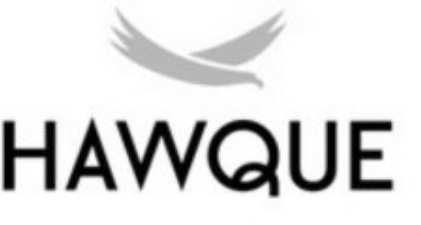 – for computer software connecting customers to security contractors, in Class 9. We advised that the logo will most likely be registrable but the wordmark alone would be too similar to marks containing the word HAWK providing similar products in the same class. Although we received an office action alleging that the HAWQUE logo mark was confusingly similar to a registered wordmark, HAWQ, that also covered Class 9 computer software, we were ultimately able to overcome the objection. Our client’s logo, HAWQUE, was successfully registered soon after.
 instead of the word mark and, although we received a confusion objection based on similarity with ESTEAM and ESTEEM CLOTHING marks, we were able to successfully able to overcome the objection and the mark was successfully registered.
 , or a combined mark: