
Trademark Protection for Tech Startups
If your tech company has just raised funding, it’s worth checking the brand name before putting more money into promoting it. You may already own the domain and have been using the name for months, but those facts alone don’t tell you whether another business has earlier trademark rights.
Changing a name during development is inconvenient. Changing it once customers know it can mean updating the app itself, replacing ads, and explaining the change to users. Trademark protection for tech startups starts with finding out whether the name is suitable, then deciding what to register and where.
Which parts of an app can you trademark
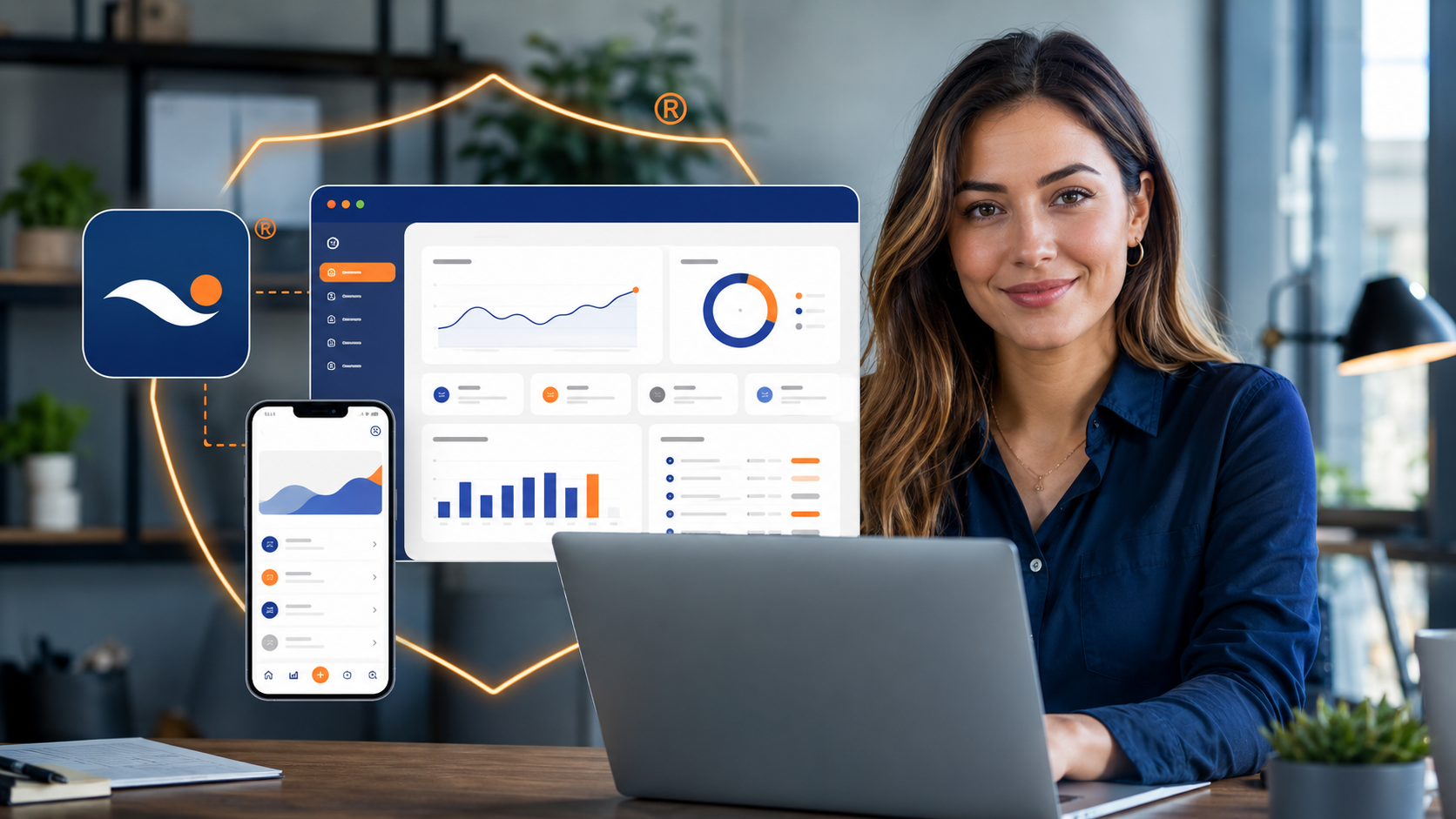
Think about how someone recognizes your product. They may search for the app by name or spot its icon on their phone without reading the words underneath it. The name, logo, and a distinctive app icon can all be trademarks when they tell users which business the product comes from. A slogan or sound may qualify too, if it does that same job.
The name you choose affects how much protection you can expect. A phrase that simply describes the software’s function may be difficult to register and give you little room to stop competitors using similar wording. An invented word, or an existing word with no obvious connection to the product, can make a stronger trademark, assuming it is available.
Registration doesn’t give you ownership of a word for every possible use. Your trademark rights concern the brand as used for particular goods or services. They also don’t cover the code or the way the software works, which need to be considered separately.
Check more than the exact name
Buying a domain is useful, but a domain registrar doesn’t check whether your business name is available to trademark. Registering the company doesn’t answer that question either. You can complete both steps and still discover that someone else has relevant rights to a similar brand.
Suppose you’re considering the name FINOVO for a financial app. Finding no trademark with that exact spelling would not finish the search. You would also need to look at names such as FYNOVO or FINNOVA and consider what those businesses offer. A similar name used for financial services could matter even if its owner doesn’t describe the product as an app.
A comprehensive trademark search looks beyond identical entries in the register. In the United States, a business can acquire rights through use without registering its mark, so marketplace checks matter as well. A search cannot promise that your application will be approved, but it can uncover a problem while you still have time to choose another name or reconsider the launch.
Check any applications you already have, too. If a founder filed before the company was set up, review who is named as the owner rather than assuming the paperwork already matches the business. This is the sort of detail that is easier to deal with before an investor or buyer asks about it.
Deciding whether to register the name or logo
For many startups, we would start with the name. A U.S. word mark application in standard characters covers the wording without tying it to a particular font, size, or color. You can redesign the logo later without having a registration that only shows the old version of the name.
An app icon can also be worth a separate application if it is distinctive and available. Consider what a user looks for when opening your app. If they recognize the symbol without reading the name underneath, the icon helps identify your brand and may deserve protection alongside the name.
You don’t need to file for every graphic in the product. With a limited budget, concentrate on the name people know and any design that helps them recognize your business. Where you file is part of that decision, since each additional market adds to the cost.
What about the code and user interface
Registering the app’s name won’t prevent someone from developing software with similar features. Copyright may protect original code and artwork, while some technical inventions may qualify for patent protection, depending on the country. Confidential information may be protected as a trade secret if you take appropriate steps to keep it secret.
The interface takes a little more care. A logo on a screen can identify your business, but the menu beside it may simply help users navigate. Common buttons and layouts designed to make the app easy to use generally cannot be claimed exclusively through trademark law.
Some nonfunctional visual designs may qualify for what is called trade dress protection. For product-design trade dress to be registered on the U.S. Principal Register, you need evidence that customers associate the design with your business. That is the requirement known as acquired distinctiveness. The U.S. Trademark Office also excludes functional designs from trade dress protection. A screen can look original without meeting those requirements.
For that reason, we would usually look at the product name and recognizable branding first. If there is a particular interface feature you want to protect, it needs its own assessment. Copyright or design protection may be relevant, depending on the feature and the country.
Class 9 and Class 42 for software
When we prepare your application, we need to explain what your software does and how customers receive it. ‘Software’ or ‘technology services’ alone may be too vague for the Trademark Office, even if those descriptions feel perfectly clear within your team.
We generally file downloadable or recorded software in Class 9. Providing temporary access to online, non-downloadable software generally belongs in Class 42. If you offer a SaaS platform through a browser and also have a downloadable app, both classes may be needed.
You also need to describe the software’s function, such as managing invoices or editing photographs. Calling the product an ‘AI tool’ doesn’t say enough about what it actually does. And if the business provides a service such as payment processing, that activity may need coverage beyond the software classes. Tell us how customers use the product so the application can reflect the business you are building.
Where you need trademark protection
Your app may be available around the world, but one trademark registration won’t give you worldwide protection. A U.S. registration does not automatically cover Canada, the United Kingdom, or the European Union. You need to consider those markets separately.
You don’t necessarily have to file everywhere at once. Look at where your customers are and where you expect to sell next. If the funding is going towards a U.S. launch, that market deserves attention before the campaign starts. If expansion into Europe is also planned, include it in the discussion now, rather than discovering a naming problem when the launch is already underway.
Applying before your product launches
The software doesn’t always have to be on sale before you apply. In the United States, we can file an intent-to-use application if you have a genuine intention to use the trademark for the goods or services listed. For an application proceeding on that basis, you will still need to show qualifying use and submit the required evidence before registration.
This can be helpful while the app is being developed. Search the name first, then discuss the appropriate filing basis and timing. Filing an application does not itself confirm that the name is available or that registration will follow. Our plain-English trademark guide explains the filing process and proof of use.
Have us check your software or app name
Send us the name you’re using or considering, tell us what the product does, and let us know which countries matter to your plans. Trademark Angel helps businesses with trademark searches and registration in the United States, Canada, the United Kingdom, the European Union, and other markets.
Start with our Free Initial Trademark Search and Assessment. We’ll look for obvious potential conflicts and give you preliminary advice on whether the name looks suitable for registration. If you go ahead with one of our trademark registration packages, we carry out a comprehensive search using professional trademark-search software before filing. The free assessment is a preliminary check; it doesn’t replace that fuller search.
This article provides general information. Trademark eligibility and filing requirements depend on the jurisdiction and individual circumstances.
Related Posts
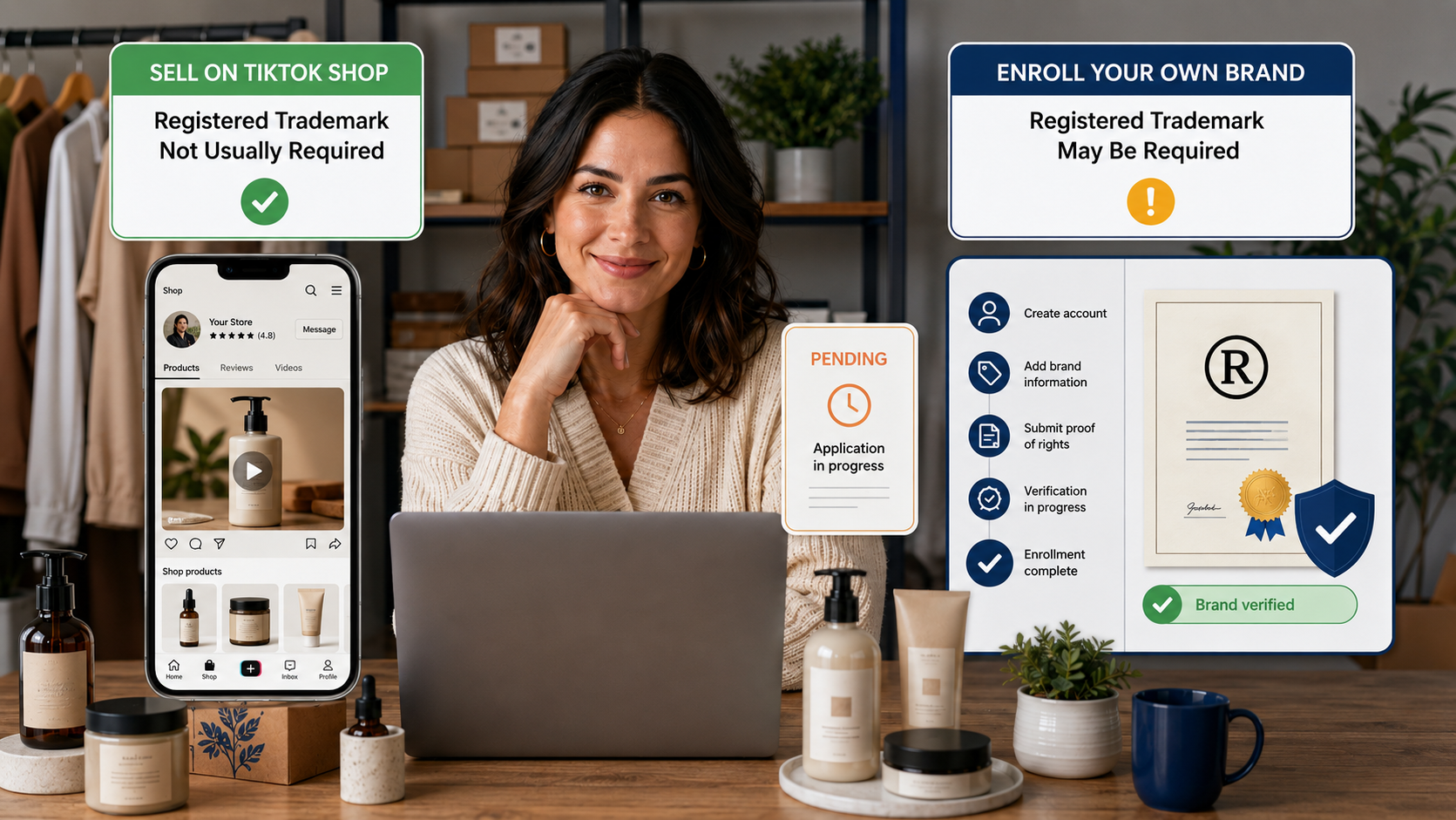
Do You Need a Trademark for TikTok Shop? Selling vs. Brand Enrollment
If you're starting a TikTok Shop, do you need to register your trademark first? Usually, no. You can sell eligible product
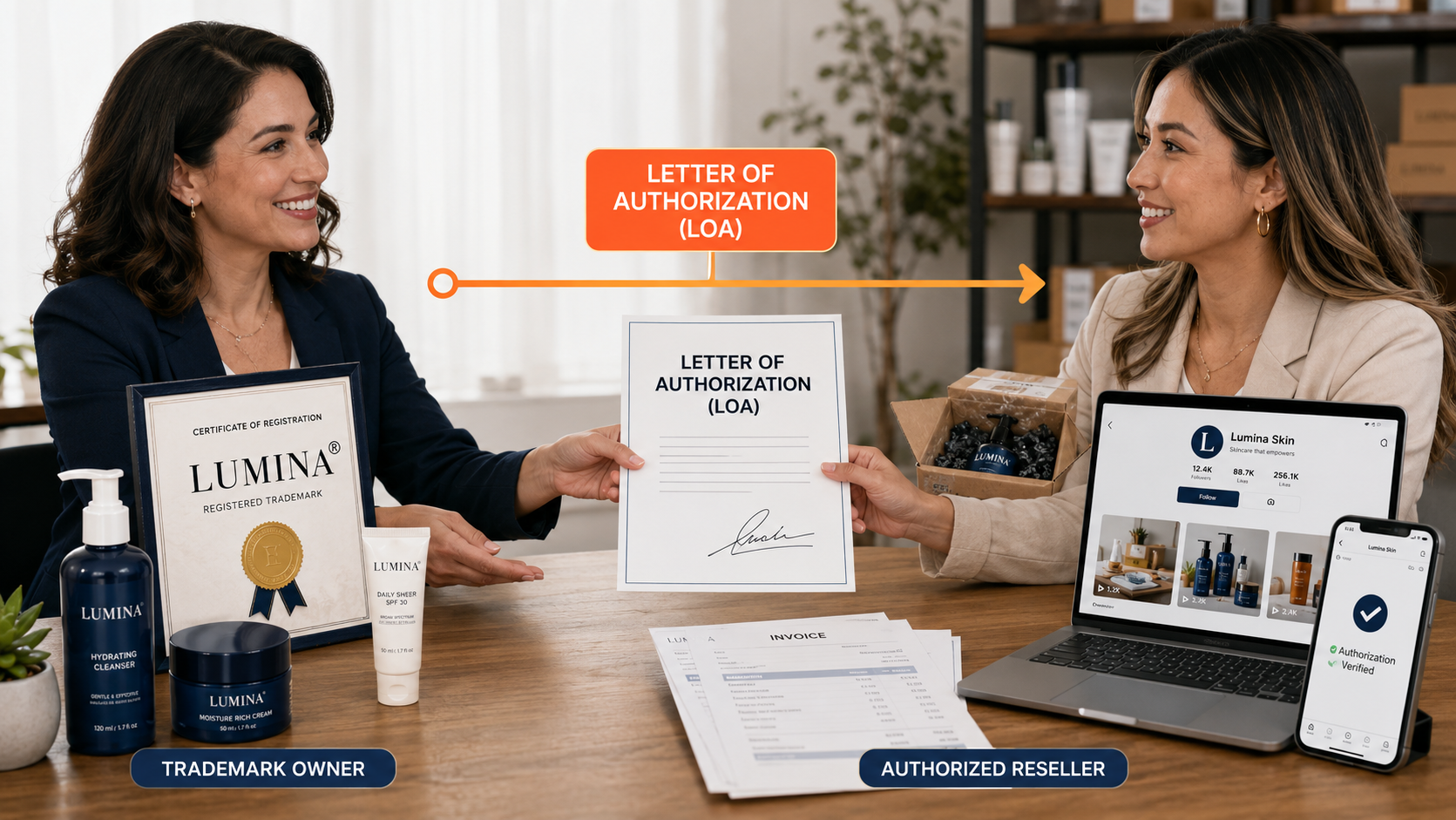
TikTok Shop Brand Authorization: Trademark Owners, Resellers and LOAs Explained
If you're starting a TikTok Shop, do you need to register your trademark first? Usually, no. You can sell eligible product

Is My Business Name Available to Trademark? How to Check Before You File
You have chosen a business name. Maybe you have already purchased the domain, created a logo, or started building your brand.
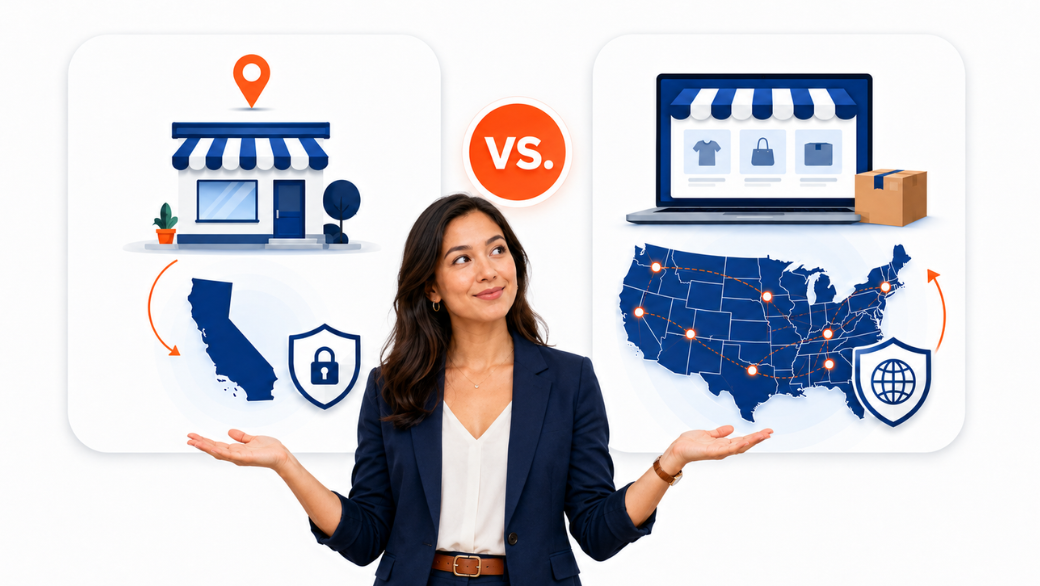
State vs. Federal Trademark Registration: Which One Does Your Business Need?
When starting a business in the United States, you may discover that trademarks can be registered at both the state and feder