
If you’re starting a TikTok Shop, do you need to register your trademark first?
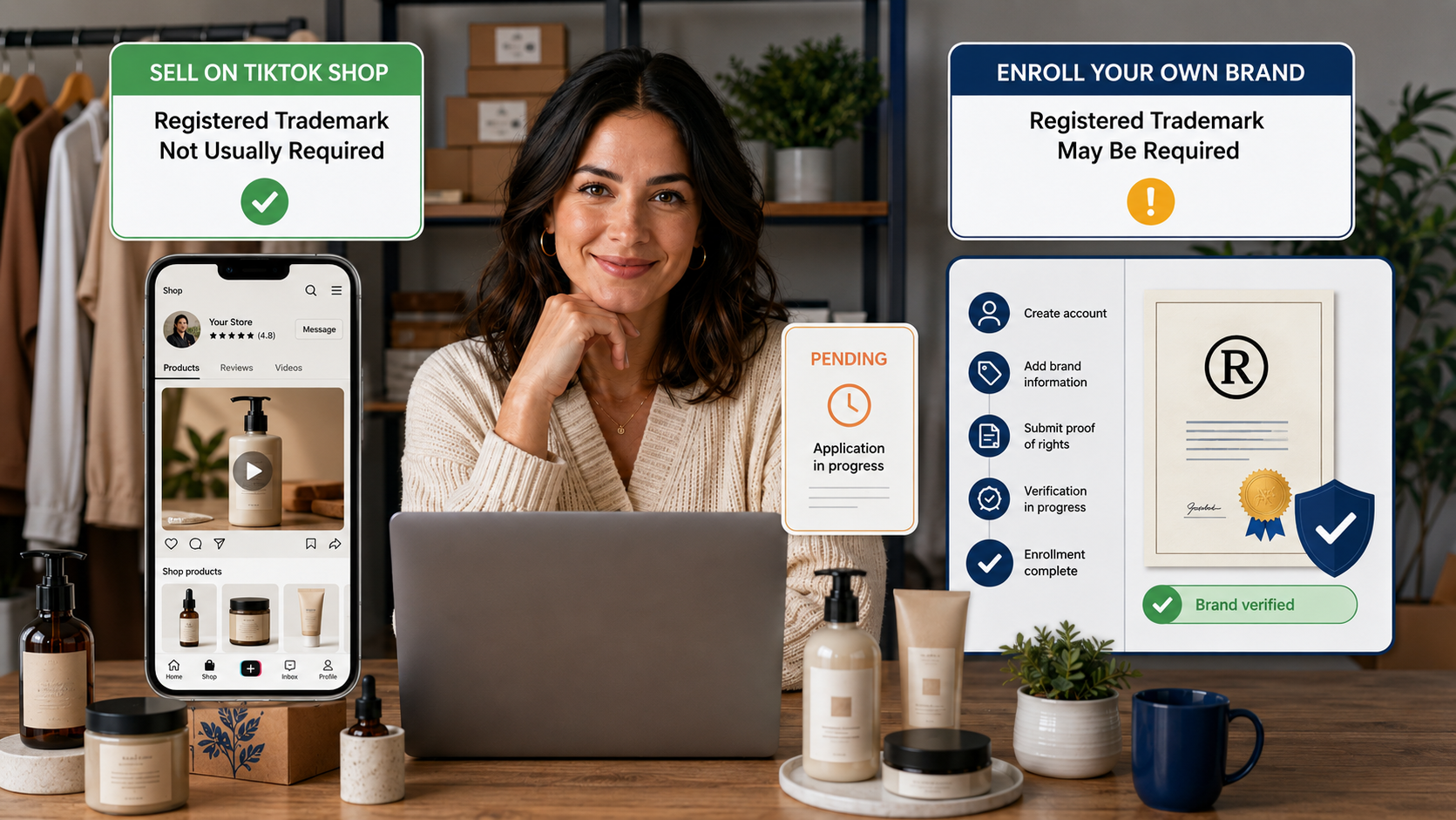
Usually, no. You can sell eligible products on TikTok Shop without having a registered trademark. But there’s an important difference between selling on TikTok Shop and enrolling your own brand.
If you want TikTok Shop to recognize you as the trademark owner of a brand, you may need a registered trademark.
This is also one area where TikTok Shop and Amazon don’t necessarily work the same way. Amazon currently accepts certain pending trademark applications for Brand Registry. TikTok Shop may require an actual registration for brand enrollment.
Can You Sell on TikTok Shop Without a Trademark?
Yes, in many cases.
TikTok Shop sellers may sell generic products, handmade goods, products under newer brands, or products belonging to other companies that they are permitted to sell. The exact rules depend on the country and product category.
There is another issue, though: TikTok allowing you to sell under a name doesn’t mean that the name is legally available as a trademark.
Imagine launching a skincare brand called LUMIVELLE BEAUTY. You order packaging, hire creators, build your TikTok following and start making sales. Six months later, you discover a similar earlier trademark covering skincare products.
At that point, changing the name could be expensive.
This is why it makes sense to check a new brand before committing too much money to it. Trademark Angel offers a FREE Trademark Search and Assessment to identify obvious potential conflicts before filing.
When Does a Registered Trademark Matter on TikTok Shop?
The situation changes when you want to enroll or verify your brand.
TikTok Shop has processes for establishing a seller’s relationship with a brand. When you’re applying as the trademark owner, you may be asked for a registered trademark and its registration details or certificate.
A pending application is different. It means you’ve applied for registration, but the trademark office hasn’t registered the mark yet.
For example, filing a U.S. application gives you a USPTO serial number. The application then goes through examination and may encounter objections before it can register.
So don’t assume that a USPTO application number will satisfy a TikTok Shop requirement for a registered trademark.
Requirements also vary between TikTok Shop markets and can change. Check the current requirements for the country where your shop operates.
The simplest way to remember the distinction is:
Selling may not require a registered trademark. Brand enrollment as the trademark owner may.
What About Amazon Brand Registry?
Amazon currently allows certain eligible pending trademark applications to qualify for Amazon Brand Registry. This means a business may be able to access Brand Registry before its trademark has completed the registration process.
TikTok Shop has different requirements.
If you sell on both platforms, see our guide to Amazon Brand Registry requirements.
There’s a practical reason to think about this early. Trademark registration can take many months. If you wait until TikTok asks for a registration before filing your application, there may be no quick way to get one.
Why Bother Registering If You’re Already Selling?
A lot of businesses start selling first and deal with trademarks later. Sometimes that works. The problem comes when the brand takes off.
TikTok can make a product visible very quickly. A successful product can also attract sellers using similar names, packaging or listings.
A trademark registration gives you official evidence that you own the mark for the products or services covered by the registration. That can be useful when you’re dealing with a marketplace or challenging someone else’s unauthorized use.
It also protects a much bigger investment than the trademark application itself.
By the time a brand is established, you may have paid for packaging, inventory, advertising, photography and creator campaigns. You may also have customers actively looking for the brand by name.
That’s a bad time to discover an earlier conflicting trademark.
A trademark search before launch can uncover potential problems while changing the name is still relatively straightforward.
What If Your U.S. Trademark Application Is Pending?
Don’t confuse filing with registration.
After you file a U.S. application, the USPTO examines it. The examiner may raise objections, and not every application ultimately registers.
If the TikTok Shop process you’re using asks specifically for a registered trademark, a pending application may not be enough.
For a business planning around TikTok Shop brand enrollment, the practical solution is to file early rather than wait until the registration is needed.
What If You Have a Canadian Trademark?
A Canadian trademark doesn’t automatically protect your brand in the United States.
Trademark rights are territorial. If you’re a Canadian company selling substantially into the U.S., separate U.S. trademark protection may be appropriate.
We explain this further in Differences Between Canadian and U.S. Trademarks.
Should You Register the Brand Name or Logo?
For a newer e-commerce business, the brand name is often the better place to start if the budget allows only one application.
A word mark isn’t tied to one particular font or logo design. That’s useful when you’re still developing the brand and may redesign the logo later.
A distinctive logo can also be registered, and established businesses often protect both.
See our FAQ Which Trademark Should I File: Word Mark or Logo? for a fuller explanation.
Before You Launch
If you’re still choosing your TikTok Shop brand, don’t overcomplicate the process.
Choose a distinctive name and search it before spending heavily on the brand. Secure the important domain name and social media handles. Decide whether you or your company will own the trademark. Then determine what products need protection and where you’re realistically going to sell them.
If TikTok Shop brand enrollment matters to you, don’t postpone the trademark application until you need the registration.
What If You’re Selling Someone Else’s Brand?
That’s a different situation.
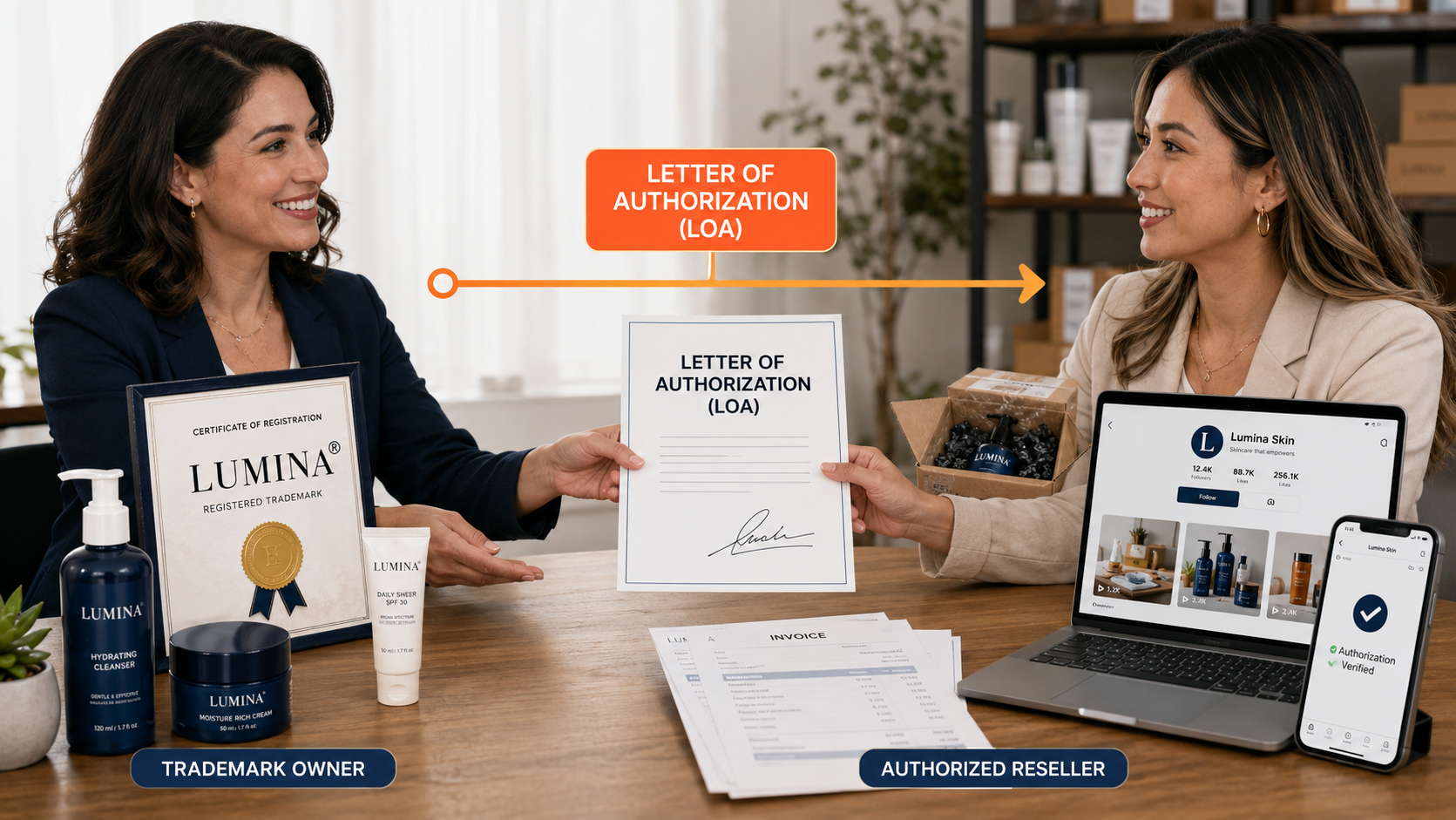
TikTok Shop may ask you to show that the trademark owner has authorized you to sell or represent the brand. Depending on your relationship with the owner, this may involve a Letter of Authorization (LOA) or other documentation.
We cover this separately in our guide to TikTok Shop Brand Authorization: Trademark Owners, Resellers and LOAs Explained.
The Bottom Line
You don’t necessarily need a registered trademark to start selling on TikTok Shop.
If you want to enroll your own brand as the trademark owner, however, a registered trademark may be required.
And even when TikTok isn’t asking for one yet, it makes sense to deal with the trademark before the brand becomes expensive to change.
If you’re developing a TikTok Shop brand, start by checking the name.
👉 Request a FREE Trademark Search and Assessment from Trademark Angel
100% FREE • No credit card required • No obligation
This article provides general trademark information and does not constitute legal advice. TikTok Shop policies and brand-enrollment requirements can change and may vary by country, product category, program, and seller account