


When Should a Startup File a Trademark Application?
Most startup founders know they should eventually register their trademark.
The harder question is when.
Should you wait until the product launches? Until you have customers? Until the business starts generating revenue?
In many cases, waiting that long creates unnecessary risk.
Trademark planning should ideally begin when the startup has selected a serious candidate for its brand name, and before substantial money is invested in that brand.
What to Check Before Filing a Trademark Application
Before filing a trademark, investigate whether the proposed name appears available.
Finding an available domain or company name is not enough. Even finding no identical trademark in an official database does not necessarily mean that the name is clear.
Trademark conflicts can involve similar, and not merely identical, marks.
A meaningful search should therefore consider similar wording, spelling variations, phonetic similarities, related meanings, and the relationship between the respective goods and services.
TRADEMARK ANGEL offers a Free Initial Trademark Search and Assessment to identify obvious potential obstacles.
Once a trademark registration package is purchased, we conduct a comprehensive trademark search using professional search software before proceeding with the application.
This gives the founder an opportunity to identify potential problems before significant filing and branding costs have been incurred.
Can You File a Trademark Before Launch?
Yes. In both the United States and Canada, startups can generally begin the trademark process before launch, but the filing rules are different.
In the United States, a US trademark application may generally be filed on an Actual Use basis when the trademark is already being used in qualifying U.S. commerce.
A startup that has not yet launched may instead be able to file on an Intent-to-Use basis if it has a genuine intention to use the trademark.
An Intent-to-Use application allows the startup to begin the federal trademark registration process before qualifying commercial use starts.
The trademark will not register until the applicant begins qualifying use and submits acceptable evidence, but filing earlier can secure an important earlier application date.
Our guide to Intent to Use vs. Actual Use trademark filing explains the difference between these two U.S. filing bases.
Startups that have already launched should also understand what qualifies as use in commerce for U.S. trademarks.
Canada works differently. A startup does not need to prove use before filing or before the trademark proceeds to registration. This means founders can also consider Canadian trademark registration before launch, provided the applicant is properly entitled to file for the mark.
Why Filing a Trademark Early Can Matter
Imagine two unrelated startups independently choosing similar names.
Startup A chooses its name first but spends a year developing its software without filing.
Startup B chooses a similar name later but promptly files a trademark application.
Who ultimately has superior rights can depend on the jurisdiction and the specific facts.
But the practical business lesson is straightforward: unnecessary delay can create uncertainty that could have been avoided.
Once your startup has selected a name, completed an appropriate search, and made a genuine commitment to the brand, there may be little advantage in postponing the trademark process.
Read more about when it is best to file a trademark.
Make Sure the Correct Owner Files
Another important question is who owns the startup brand.
Is it one founder personally? The startup company? A parent company?
The trademark application should be filed in the name of the correct owner.
Founders should not casually file personally on the assumption that the application can always be transferred to the company later.
This is particularly important for U.S. Intent-to-Use applications because assignments before qualifying use begins are subject to specific restrictions.
Filing under the wrong owner can create serious problems, and some ownership errors may not be easily corrected.
Ownership can also matter during fundraising or acquisition due diligence. Investors will generally want the startup to own or properly control the intellectual property on which its business depends.
What Goods and Services Should the Application Cover?
A trademark application must identify the goods or services associated with the mark.
For a technology company, “technology services” is not sufficiently precise.
The startup might provide downloadable software, SaaS, mobile apps, AI tools, financial services, consulting, online marketplaces, or physical hardware.
Different activities may fall into different trademark classes.
The application should accurately protect what the company offers or genuinely intends to offer while taking sensible near-term growth plans into account.
For startups targeting North America, you can review our US trademark registration and Canadian trademark registration pages for information about the filing process and available registration packages.
Should You Register the Name or Logo?
For many startups, the brand name should be the first priority.
A standard-character trademark application generally protects the wording without restricting it to one particular font, colour, or visual design.
That flexibility is useful because startup logos frequently change as the company develops.
If the logo itself contains important distinctive elements, a separate logo application may also be worthwhile.
For a startup with a limited initial budget, however, protecting the core brand name often provides greater flexibility than filing only for a logo.
Trademark Filing Should Be Part of Your Launch Strategy
Filing a trademark should not be treated as an administrative task to address after everything else is finished.
Ideally, trademark planning sits alongside incorporation, domain acquisition, product development, contracts, and fundraising.
Search first. Determine the correct owner. Decide what needs protection. Then file at the appropriate time.
If your startup is preparing to launch, begin with TRADEMARK ANGEL Free Initial Trademark Search and Assessment to find out whether your proposed name may be suitable for trademark registration.
Related Posts
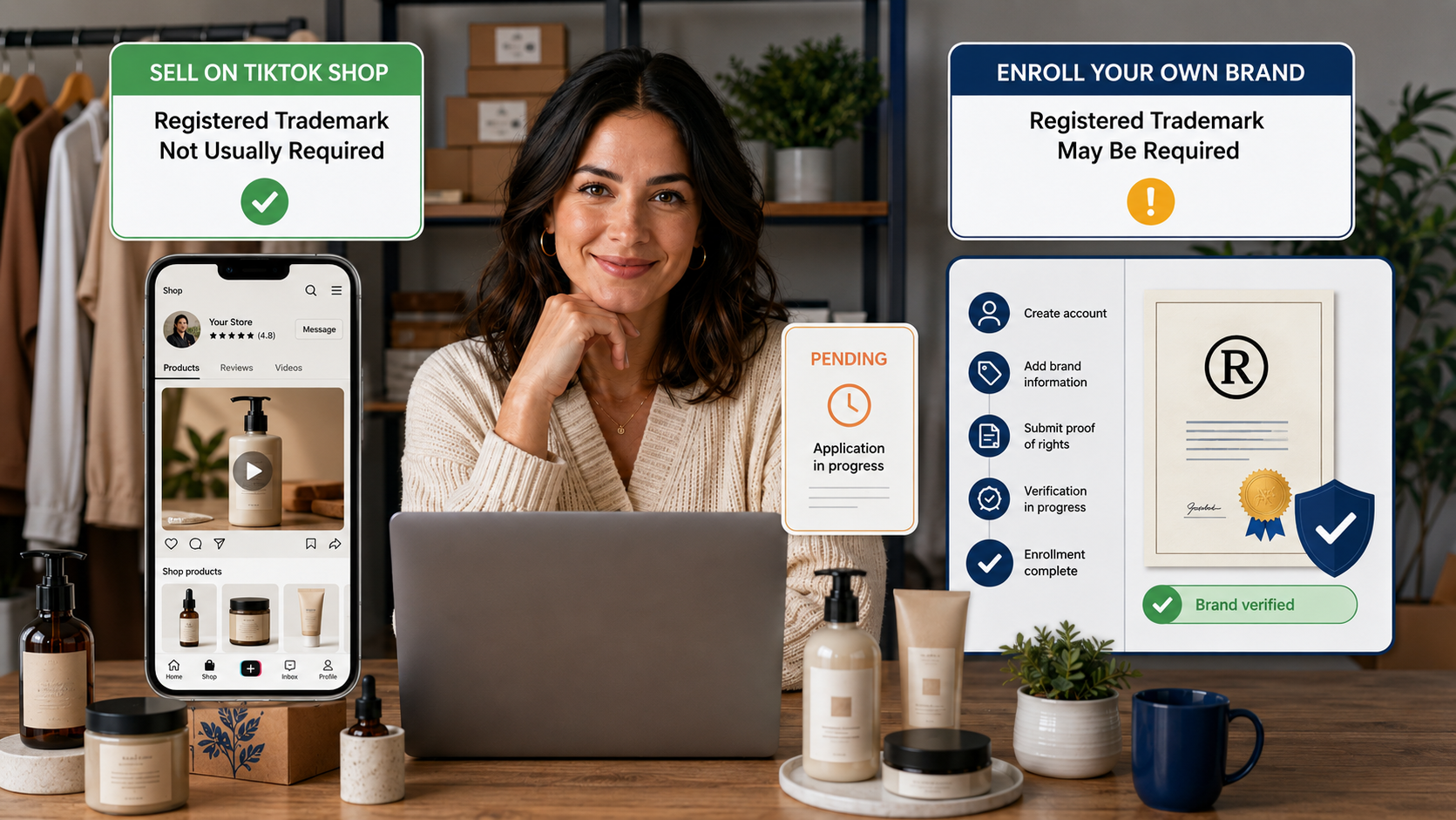
Do You Need a Trademark for TikTok Shop? Selling vs. Brand Enrollment
If you're starting a TikTok Shop, do you need to register your trademark first? Usually, no. You can sell eligible product
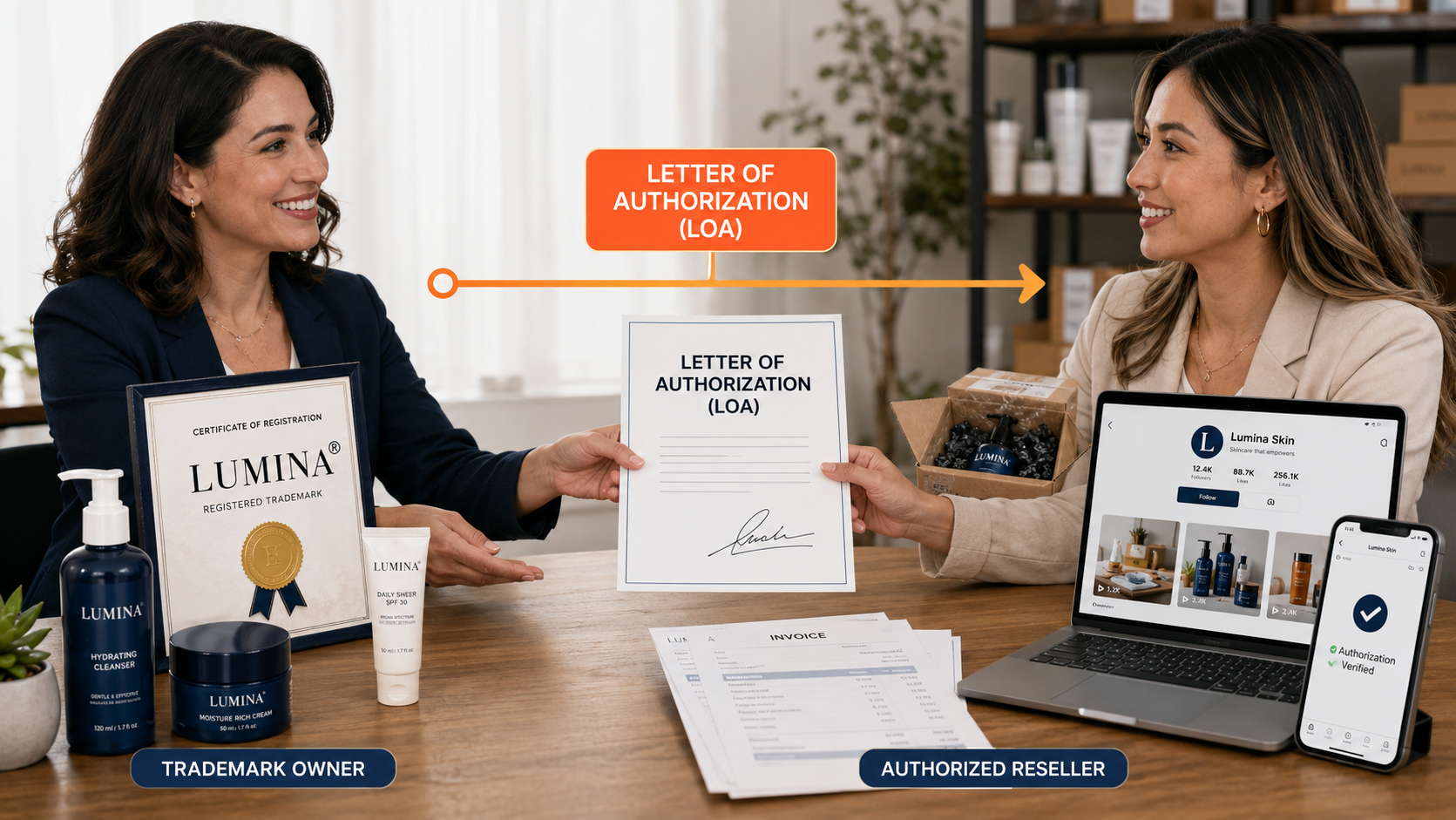
TikTok Shop Brand Authorization: Trademark Owners, Resellers and LOAs Explained
If you're starting a TikTok Shop, do you need to register your trademark first? Usually, no. You can sell eligible product

Is My Business Name Available to Trademark? How to Check Before You File
You have chosen a business name. Maybe you have already purchased the domain, created a logo, or started building your brand.

State vs. Federal Trademark Registration: Which One Does Your Business Need?
When starting a business in the United States, you may discover that trademarks can be registered at both the state and feder