

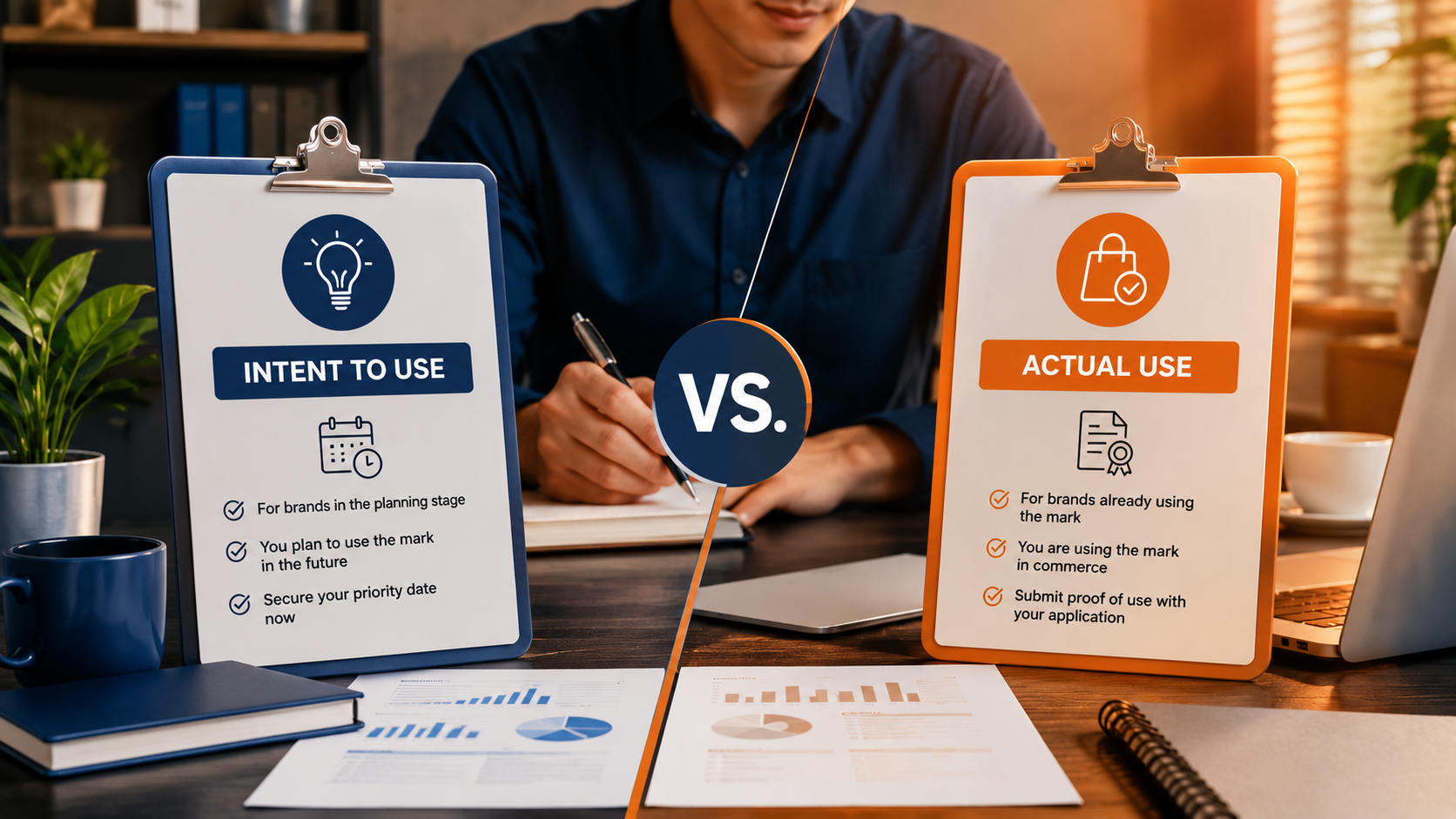
Intent to Use vs. Actual Use Trademark Filing: What’s the Difference?
If you’re planning to register a trademark in the United States, you’ll soon come across two terms that don’t exist in many other countries: Actual Use and Intent to Use.
For many business owners, especially those filing a U.S. trademark for the first time, the distinction can be confusing. The good news is that it’s actually quite straightforward once you understand what the USPTO is trying to determine.
The question is simply this:
Are you already using your trademark in U.S. interstate commerce
If the answer is yes, you’ll normally file your application on an Actual Use basis. If the answer is no, but you have a genuine intention to start using the trademark in the near future, you’ll usually file on an Intent to Use basis.
Let’s take a closer look at how each filing basis works.
What is an Actual Use application?
An Actual Use application is filed under Section 1(a) of the U.S. Trademark Act. It is intended for businesses that are already using their trademark in U.S. interstate commerce for the goods or services listed in the application.
Simply owning a domain name, incorporating a company or reserving a business name isn’t enough. The trademark must actually be used to identify your goods or services in the marketplace, and that use must satisfy the USPTO’s legal requirements.
When filing an Actual Use application, you’ll generally need to provide:
- the date you first used the trademark anywhere;
- the date you first used the trademark in U.S. interstate commerce; and
- a specimen showing how the trademark is actually used.
If the application is approved and no objections arise, the trademark can proceed directly to registration because you’ve already demonstrated use.
What is an Intent to Use application?
An Intent to Use application is filed under Section 1(b). This filing basis is designed for businesses that are not yet using their trademark in the United States but honestly intend to do so.
This is very common. Perhaps you’re still developing your product, finalizing your packaging, building your website, preparing to launch on Amazon, or negotiating with suppliers. Your business may be ready in a few months, but you don’t want to wait that long before protecting your brand.
An Intent to Use application allows you to secure your filing date now while you continue preparing for your launch. If you’re wondering whether now is the right time to file, you may also enjoy reading When is the Best Time to File a Trademark?.
What happens after filing an Intent to Use application?
Many people assume that an Intent to Use application sits on hold until they start using the trademark. That isn’t how the process works.
The USPTO examines an Intent to Use application in exactly the same way as an Actual Use application. If you’d like to understand the entire process, have a look at our Outline of U.S. Trademark Registration Process.
The examining attorney will search for conflicting trademarks and review the application for any legal issues.
If everything is acceptable, the application will be published for opposition. Assuming nobody successfully opposes it, the USPTO will issue a Notice of Allowance instead of a registration certificate.
Only then do you need to prove that you’ve started using the trademark.
This is done by filing a Statement of Use, together with a specimen showing the trademark in use and payment of the applicable USPTO government fees.
Once the Statement of Use is accepted, your trademark can proceed to registration.
If you’re still not ready to launch, the USPTO allows extensions of time. In most cases, applicants have up to three years from the Notice of Allowance to begin using the trademark and submit their Statement of Use.
Is it better to file on an Actual Use or an Intent to Use basis?
Neither filing basis is better than the other. The correct choice depends entirely on your circumstances.
If you’re already using your trademark in U.S. interstate commerce, you should generally file on an Actual Use basis.
If you haven’t started using the trademark yet, an Intent to Use application is usually the correct option. It allows you to establish an earlier filing date without waiting until your business is fully launched.
In many situations, filing sooner rather than later is a smart business decision. It allows you to protect your brand before investing significant amounts of money in advertising, packaging, inventory, a new website or a product launch. We discuss this in more detail in Avoid the Cost of Rebranding – Protect Your Trademark Today!
There can also be strategic reasons to file on an Intent to Use basis.
For example, you may already know that another business is using a similar trademark and may have earlier common law rights. Or perhaps you believe there is a reasonable chance of receiving a cease and desist letter once your brand becomes more visible.
In situations like these, filing before your public launch can sometimes be advantageous. It allows you to secure your filing date while you continue evaluating the legal risks and deciding how best to move forward. A good example of why timing matters can be found in our article The Race to Trademark: What Happens If Someone Beats You by a Day?
Of course, filing early does not eliminate those risks. A company with stronger prior rights may still oppose your application or object to your use of the trademark. However, establishing your filing date before making substantial investments in your brand is often a sensible strategy.
Can I simply claim Actual Use if I’m about to launch?
No.
Some applicants think that if their website is almost finished or their products will be available next week, they might as well file under Actual Use.
That is not how the USPTO views it.
You should only file on an Actual Use basis if the trademark is genuinely being used in U.S. interstate commerce at the time the application is filed. Making a false declaration to the USPTO can have serious consequences and may even jeopardize your registration.
If you’re not yet using the trademark, even if you’re only a few weeks away from launch, the correct filing basis is usually Intent to Use.
How do I know which filing basis applies to me?
For many businesses, especially those located outside the United States, the answer isn’t always obvious.
For example, does selling through Amazon qualify? What if you’ve only made one sale? What if customers can order through your website but you haven’t actually shipped anything yet?
These are common questions, and the answers depend on the specific facts of each case.
If you’d like to learn more about all available U.S. filing bases, including Sections 44(d) and 44(e) for foreign applicants, we recommend reading our article Understanding U.S. Trademark Filing Bases: Which One Is Right for You?
When we prepare your U.S. trademark application, we’ll review your circumstances and recommend the filing basis that best fits your situation. If you’re already using your trademark, we’ll confirm whether your evidence is likely to satisfy the USPTO. If you’re not yet using it, we’ll prepare an Intent to Use application and guide you through the Statement of Use process when the time comes.
Choosing the correct filing basis at the beginning helps avoid unnecessary delays, additional costs and complications later in the trademark registration process.
Related Posts

Do You Need a Trademark for TikTok Shop? Selling vs. Brand Enrollment
If you're starting a TikTok Shop, do you need to register your trademark first? Usually, no. You can sell eligible product
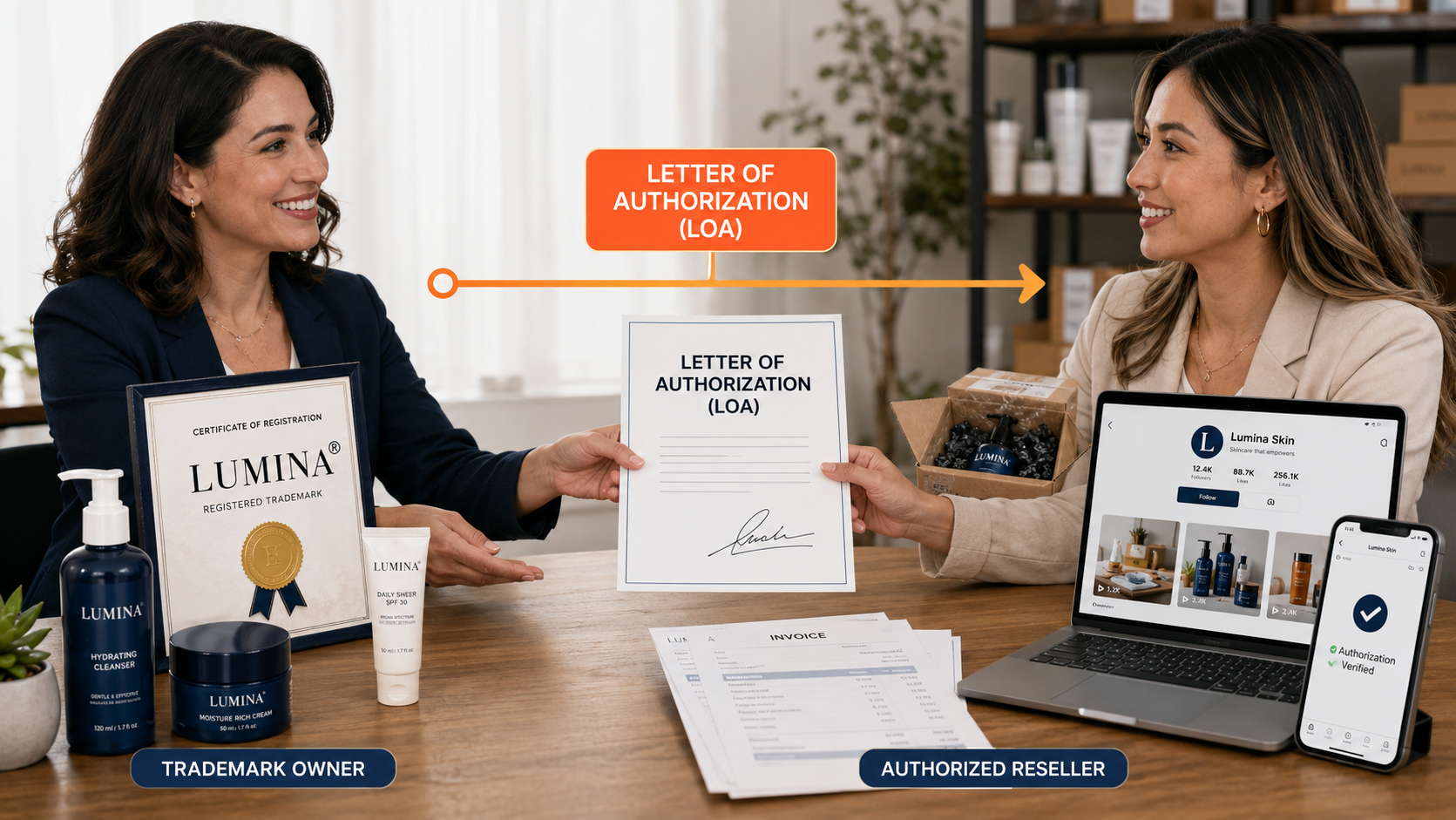
TikTok Shop Brand Authorization: Trademark Owners, Resellers and LOAs Explained
If you're starting a TikTok Shop, do you need to register your trademark first? Usually, no. You can sell eligible product

Is My Business Name Available to Trademark? How to Check Before You File
You have chosen a business name. Maybe you have already purchased the domain, created a logo, or started building your brand.

State vs. Federal Trademark Registration: Which One Does Your Business Need?
When starting a business in the United States, you may discover that trademarks can be registered at both the state and feder