


State vs. Federal Trademark Registration: Which One Does Your Business Need?
When starting a business in the United States, you may discover that trademarks can be registered at both the state and federal level.
So which one do you need?
For most businesses that operate across state lines, sell online, or expect to grow beyond one local market, federal trademark registration is usually the stronger long-term choice. State registration can still be useful, but its protection is much more geographically limited.
Let’s look at how the two systems differ and when each one makes sense.
Looking for the short answer? See our FAQ on the difference between state and federal trademarks.
What Is a State Trademark?
A state trademark is registered with an individual U.S. state rather than with the United States Patent and Trademark Office (USPTO).
For example, a business operating in Florida may be able to register its trademark with the State of Florida.
The most important limitation is geographic:
A state trademark registration generally provides protection only within that particular state.
Registering a trademark in Florida does not give you a federal registration or nationwide rights.
State registration may therefore be appropriate for a business that is genuinely local—for example, a local service business whose activities are confined to one state.
But businesses should think about where they are going, not just where they are today.
If you expect your business to expand, sell online, attract customers from other states, or develop into a national brand, relying only on state registration may provide much less protection than you eventually need.
What Is a Federal Trademark?
A federal trademark application is filed with the United States Patent and Trademark Office (USPTO).
Federal registration provides substantially broader rights and benefits than state registration and is generally the preferred option for businesses that qualify.
A federal trademark registration provides important advantages, including nationwide notice of your trademark rights and legal presumptions of your ownership and exclusive right to use the trademark for the registered goods or services.
This makes federal registration particularly valuable for businesses that intend to grow.
State vs. Federal Trademark: What’s the Difference?
| State Trademark | Federal Trademark | |
| Registration authority | Individual state | USPTO |
| Geographic scope | Generally limited to that state | Nationwide federal registration |
| Best suited for | Truly local businesses | Businesses operating or expanding beyond a local market |
| Interstate commerce | Not necessarily required | Federal commerce requirements apply |
| Online/e-commerce brands | Usually not the preferred long-term solution | Usually preferable if eligible |
| Expansion outside the state | Limited protection | Much stronger foundation for expansion |
| Legal benefits | More limited | Substantial federal statutory benefits |
| USPTO registration | No | Yes |
| Federal ® registration | No | Yes, after federal registration |
The biggest distinction is therefore scope.
If your business operates only locally, state registration may be sufficient for your current circumstances.
If your business has a broader market, or you expect it to have one, federal registration is usually much more valuable.
Do I Need to Be Doing Business in More Than One State?
This is where the issue becomes more complicated.
People often summarize the federal requirement by saying:
“You need to sell in two states to get a federal trademark.”
That is an oversimplification.
Federal trademark jurisdiction is based on commerce that Congress may regulate. Interstate sales are an obvious example, but they are not the only possible basis.
For example, an online company providing services to customers in multiple states can generally have a clear connection to interstate commerce.
A product business shipping orders from Georgia to customers in Florida, Texas and California presents another straightforward example.
For purely local businesses, the analysis can be less obvious.
A restaurant, salon, dental practice or other local service provider should therefore not assume either that it automatically qualifies for federal registration or that federal registration is automatically impossible.
The circumstances of the business matter.
For a more detailed explanation, see our guide to Use in Commerce for U.S. Trademarks.
What About an Online Business?
For e-commerce and online businesses, federal trademark registration is particularly important.
Imagine you launch a brand in New York and initially make only a small number of sales. Six months later, your website is shipping products throughout the United States.
A state registration would not give you the same federal trademark rights or nationwide federal protection as a USPTO registration.
This is one reason why businesses such as these should consider federal protection early:
- Amazon and other marketplace sellers;
- Shopify and other e-commerce stores;
- SaaS businesses;
- online education companies;
- consultants serving clients nationally;
- app and software companies;
- subscription businesses; and
- brands selling or shipping products throughout the United States.
Your business may start small without remaining local for very long.
What If I Haven’t Started Selling Yet?
This is another important difference that business owners sometimes overlook.
You do not necessarily have to wait until your business launches before filing a federal trademark application.
The United States allows an applicant with a genuine intention to use a trademark in commerce to file under Section 1(b), Intent to Use.
This can be extremely useful for a new business.
Suppose you are preparing to launch a new skincare brand. You have selected the name, purchased the domain and started developing packaging, but your products won’t be available for another six months.
Waiting until launch to apply for the trademark could create unnecessary risk.
An Intent-to-Use application may allow you to secure an earlier filing date while you prepare to launch. You will, however, eventually have to establish qualifying use before the trademark can register under this filing basis.
We explain this process in detail in Understanding U.S. Trademark Filing Bases: Which One Is Right for You?
When Does State Trademark Registration Make Sense?
State registration can make sense when a business is genuinely local and expects to remain that way.
For example, consider a small local service provider operating exclusively within one state, with no meaningful interstate activities and no plans for broader expansion.
Federal registration may not be the appropriate immediate solution.
State registration can potentially provide an additional layer of protection within that state.
However, before choosing state registration simply because it is cheaper or easier, consider your future business plans.
Where will your business be in two or three years?
If expansion is reasonably foreseeable, federal protection may ultimately be much more valuable.
There are also other situations where filing a federal trademark application may not be advisable. See our guide: When should I not file my trademark in the US?
Why Federal Trademark Registration Is Usually Better for a Growing Brand
A business’s trademark can become one of its most valuable assets.
Customers may recognize your name long before they know the legal name of the company behind it.
Federal registration creates a much stronger foundation for protecting that asset and securing nationwide trademark rights throughout the United States.
This becomes increasingly important when:
- your business expands into new states;
- you start selling online;
- competitors discover your brand;
- you license or franchise the business;
- you attract investors;
- you eventually sell the company; or
- another business adopts a confusingly similar name.
Trademark strategy should therefore reflect where the business is heading, rather than only where it operates today.
Do I Need Both a State and Federal Trademark?
Usually, a business with an appropriate federal registration does not need to register the same trademark separately in every state.
Federal registration is specifically valuable because it provides federal protection on a nationwide basis.
There may be particular circumstances where state registration is useful in addition to other rights, but registering separately in all 50 states is not the normal trademark strategy for a growing national business.
What If I Start Locally and Expand Later?
You can start with a local business and later apply federally when your circumstances change.
But waiting has a potential disadvantage:
someone else may file for a similar trademark in the meantime.
Trademark rights can become complicated when different businesses begin using similar trademarks in different geographic areas.
That is why we recommend thinking about trademark protection early—particularly if you already know that the business is intended to grow beyond its original market.
Before You Register, Search the Trademark First
Whether you are considering state or federal registration, don’t rush directly into filing.
Search first.
Finding an identical trademark is only part of the analysis. A prior trademark does not have to be identical to create a problem. Similarities in appearance, sound, meaning or overall commercial impression can potentially lead to refusal or conflict.
At TRADEMARK ANGEL, we recommend checking the trademark before investing heavily in the brand or filing an application.
You can start with our Free Trademark Search.
If you purchase one of our U.S. trademark registration packages, a comprehensive trademark search is included as part of the process.
State or Federal Trademark? The Bottom Line
If your business is truly local and operates only within one state, state trademark registration may be appropriate.
But if you sell products across state lines, operate online, provide services beyond a purely local market, or have genuine plans to expand, federal trademark registration is generally the stronger long-term option if you qualify.
And if your business hasn’t launched yet, don’t assume that you have to wait. An Intent-to-Use application may allow you to begin the federal trademark process before sales start.
The right filing strategy depends on how your business operates today—and where you expect it to go tomorrow.
Not sure which option applies to you?
Start with our free trademark search and tell us a little about your business. We’ll review your trademark and help you determine the appropriate next step.
Related Posts

Do You Need a Trademark for TikTok Shop? Selling vs. Brand Enrollment
If you're starting a TikTok Shop, do you need to register your trademark first? Usually, no. You can sell eligible product
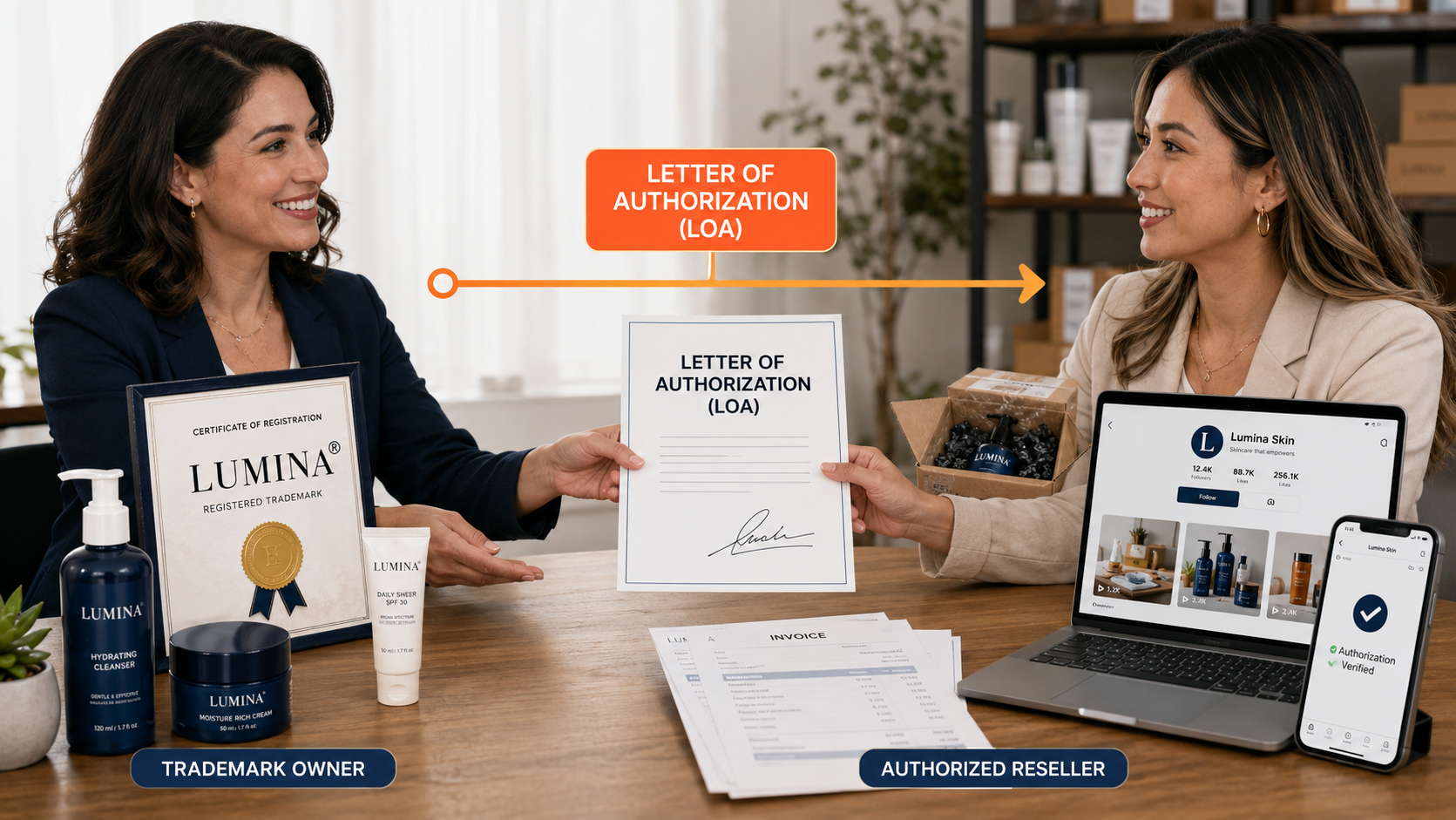
TikTok Shop Brand Authorization: Trademark Owners, Resellers and LOAs Explained
If you're starting a TikTok Shop, do you need to register your trademark first? Usually, no. You can sell eligible product

Is My Business Name Available to Trademark? How to Check Before You File
You have chosen a business name. Maybe you have already purchased the domain, created a logo, or started building your brand.

How Tech Startups Should Plan Trademark Protection for International Growth
A technology startup can become international remarkably quickly. A Canadian SaaS company can acquire U.S. customers without