


What is a disclaimer in U.S. trademark applications?
US trademark applications
If it’s your first time (or fourth time!) filing US trademark applications, you might be contacted by a trademark Examiner who requires that a disclaimer be added to your application. Sometimes, this can even take the form of an official Office Action, meaning that the application is in danger of being rejected if such a disclaimer is not provided. But what exactly is a disclaimer, and what does it mean to include one?
To begin, it’s important to realize that some aspects of your US trademark application, like a particular word, might be so common of a term or a descriptor that it would be impossible to trademark. For example, let’s say that you’re filing an application for the legal use of the company name Jim’s Bicycle Bonanza. The term “Bicycle”, in this regard, is a common one. Many of your competitors and peers would likewise have company names that utilize the term “Bicycle”, like Suzy’s Bicycle Stop-and-Shop and Alpine Bicycles and Boards. Because of the ubiquity of this term, you need to provide a disclaimer to your application noting that you are not attempting to trademark the use of the term “Bicycle” itself. In other words, it’s you noting that other parties have the free and legal use to the term “Bicycle” in their own, original iterations.
Now, it is possible to argue a particular term’s unregisterability with the trademark Examiner, if you have good reason to do so. But for the most part, failing to provide a disclaimer for “common use” terms will result in your application being rejected.
US trademark applications:
What other terms might be cause for a disclaimer?
- Descriptive words, like “Fantastic” or “Blue”
- Informational words, like the year of a company’s founding or notices like “Since ____” (i.e. “Since 1950”)
- Geographical words, like “Coastal” or “Southern”
- Generic words, like “Bicycle” or “Pillow” or “Vegetable”
Of course, none of this means that you can’t trademark Jim’s Bicycle Bonanza. It merely means that you are not applying for the legal ownership of term “Bicycle” in and of itself. As such, a disclaimer would look something like:
Apart from the respective mark, no claim is being made to the exclusive use of the term BICYCLE.
Is it possible for an entire trademark to be disclaimed?
No, because that would defeat the purpose of filing a trademark application in the first place; if this were the case, the trademark would merely be rejected for being too generic or descriptive. Rather, the disclaimer is merely noting that certain parts of its composition (like the use of the term “Bicycle”) are not trademarked.
Should you ever provide a voluntary disclaimer during filing?
With rare exceptions, the answer is NO. Volunteering a disclaimer is like admitting that your trademark has a weakness, usually not a good idea to do. Generally speaking, we usually recommend not to provide any voluntary disclaimers during filing.
Are disclaimers required in Canada?
No, in Canada disclaimers are no longer asked for, except for 11-point Canadian maple leaf, use of which has to be disclaimed.
In conclusion, disclaimers are common, straightforward, and often necessary for a trademark application to be accepted. And if you have any questions about what might need a disclaimer, ask a representative from TRADEMARK ANGEL! Our team of experts is happy to help with any step of the trademark application process.
Thanks,
The Trademark Angel Team
Related Posts

Do You Need a Trademark for TikTok Shop? Selling vs. Brand Enrollment
If you're starting a TikTok Shop, do you need to register your trademark first? Usually, no. You can sell eligible product
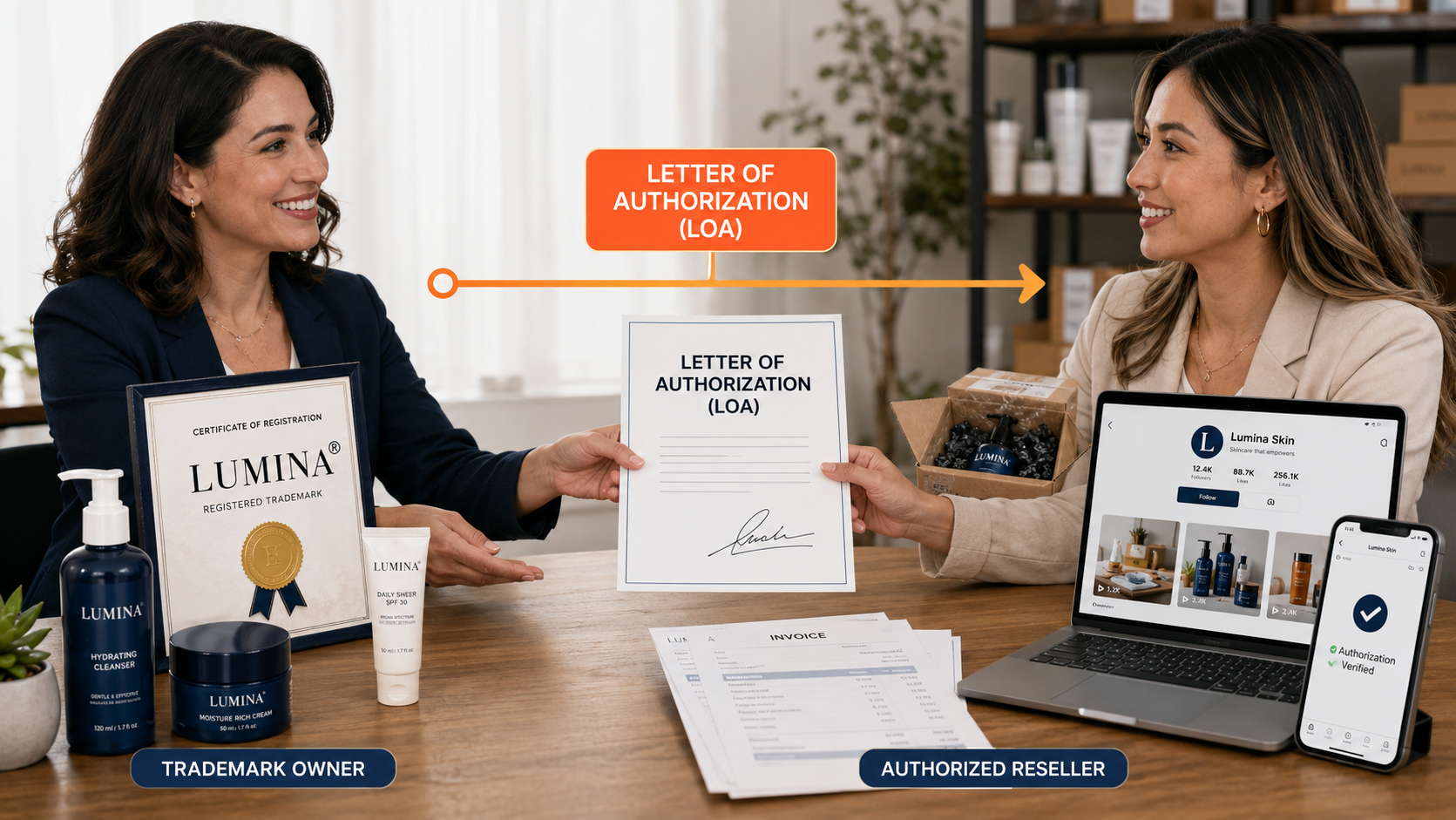
TikTok Shop Brand Authorization: Trademark Owners, Resellers and LOAs Explained
If you're starting a TikTok Shop, do you need to register your trademark first? Usually, no. You can sell eligible product

Is My Business Name Available to Trademark? How to Check Before You File
You have chosen a business name. Maybe you have already purchased the domain, created a logo, or started building your brand.

State vs. Federal Trademark Registration: Which One Does Your Business Need?
When starting a business in the United States, you may discover that trademarks can be registered at both the state and feder