
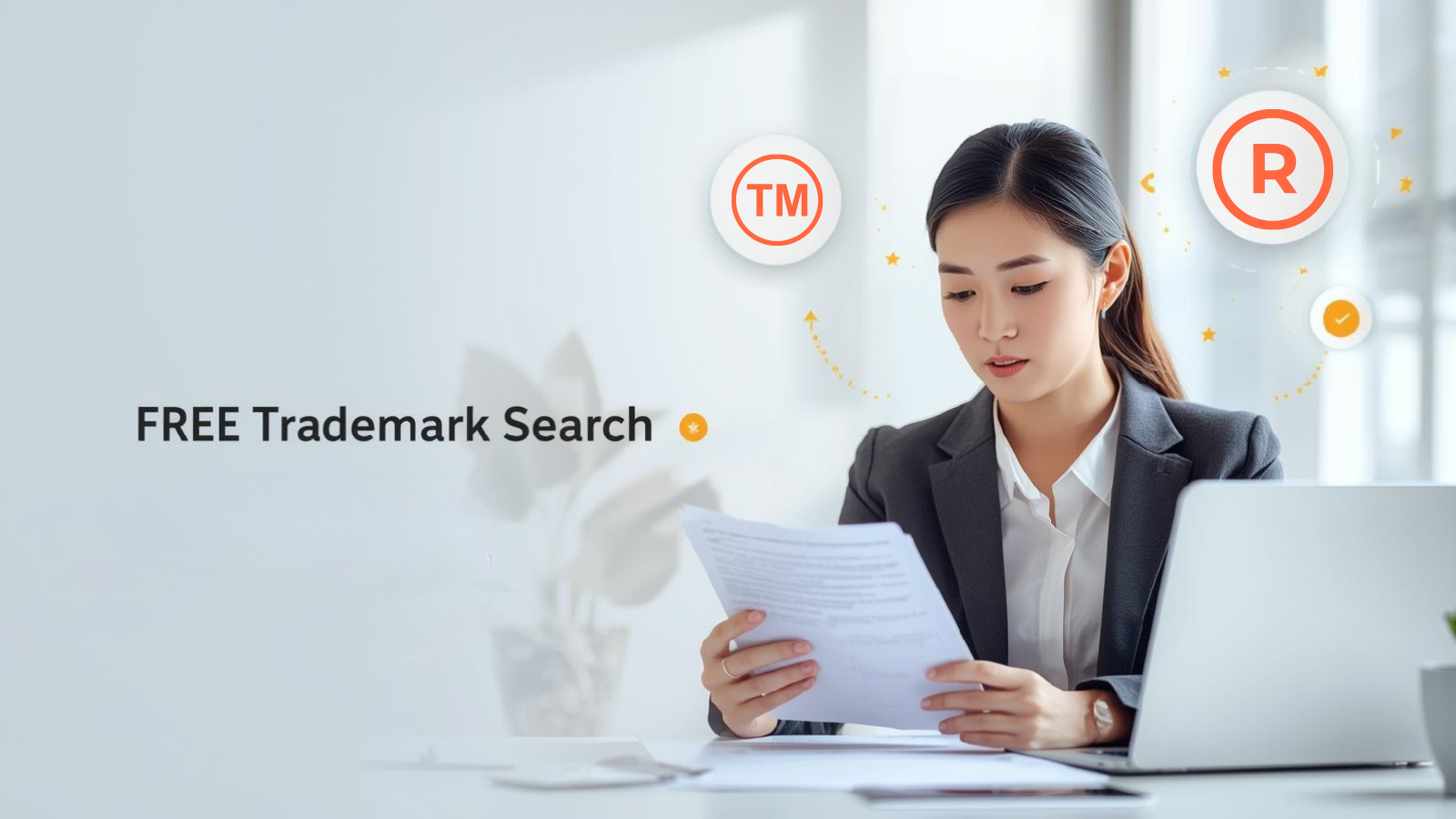
Free Trademark Search Tools: USPTO vs CIPO Comparison
Most people start their trademark journey the same way. They open Google (or Chat GPT), type the brand name, see nothing obvious, and assume they are safe. Then someone mentions “doing a trademark search,” and they end up on a government database that looks like it was built twenty years ago.
In the US, that tool is TESS.
In Canada, it is the CIPO trademark database.
Both are free. Both are official. Both are misunderstood.
This article explains what each tool actually does, how they differ, and where self-searches quietly fail.
What a free trademark search really means
A free trademark search usually means one thing: you are checking whether an identical or very similar trademark already exists in the official database.
That is all.
It does not mean:
- Your trademark is registrable
- Your trademark is strong
- You are safe from objections
- You are safe from oppositions
- You can enforce the mark later
The database only shows what is already filed or registered. It does not explain risk, likelihood of confusion, or examiner behavior. That interpretation part is where most problems start.
Still, these tools are useful when used correctly.
USPTO free trademark search (TESS)
The USPTO search system is called TESS (Trademark Electronic Search System). It covers US federal trademark applications and registrations.
What TESS does well
- Shows live, pending, and dead US federal marks
- Allows basic word searches
- Allows structured searches with operators
- Shows goods, services, and filing basis
- Helps identify obvious conflicts
If your brand name is already registered for identical goods or services, TESS will usually reveal that quickly.
Where TESS causes problems
- It does not automatically show similar-sounding marks
- It does not flag spelling variations
- It does not assess descriptiveness
- It does not evaluate risk across related goods
- It does not explain examiner logic
For example, searching “SUNFUEL” will not automatically warn you about “SON FUEL,” “SUN FUELS,” or “SUNFUL” unless you already know how to structure the query. Many self-filers miss these entirely.
TESS is powerful, but only if you already understand trademark law and search logic. Otherwise, it gives a false sense of security.
CIPO free trademark search (Canada)
Canada’s trademark database, managed by CIPO, is more modern in appearance and easier to navigate at first glance.
What CIPO does well
- Cleaner interface
- Easier basic word searching
- Shows pending and registered Canadian marks
- Displays Nice classes clearly
- Helpful filters for status and owner
For quick checks, many users find the Canadian system more intuitive.
Where CIPO still falls short
- Similar-sounding marks are not reliably flagged
- French–English equivalents are often missed
- Examiner objections are not predictable from search results
- Descriptive risks are not obvious
- Goods wording differences can hide conflicts
Canada is also stricter than many applicants expect when it comes to descriptiveness. A mark that looks “available” in the database may still be refused during examination.
Key differences between USPTO and CIPO searches
While both tools aim to show existing trademarks, the systems reflect different trademark cultures.
USPTO
- Heavier emphasis on likelihood of confusion
- Broader interpretation of related goods and services
- Higher refusal rates than most people expect
- Examiners rely heavily on phonetic similarity
CIPO
- Strong focus on descriptiveness
- Bilingual considerations (English and French)
- Increasing scrutiny after recent law changes
- Confusion analysis that often surprises applicants
A name that looks fine in one country may fail in the other, even when using the same wording.
What both free searches cannot tell you
This is the part that matters most.
Neither USPTO nor CIPO tools can tell you:
- Whether your mark is too descriptive
- Whether it is weak and hard to enforce
- Whether an examiner is likely to object
- Whether your goods description is risky
- Whether small changes could improve registrability
They also do not search:
- Unregistered common-law rights
- Business names
- Domain usage
- Marketplace use
- Social media brand conflicts
That means a “clear” search result does not equal safety.
The time cost people underestimate
Many clients assume a trademark search takes 15 minutes.
A proper self-search usually takes closer to 15–20 hours once you include:
- Learning how trademark law works
- Understanding classes and goods descriptions
- Running multiple variations
- Reviewing similar marks manually
- Interpreting examiner behavior
- Second-guessing everything
This is where cost analysis becomes important.
If your time is worth $50 an hour, that is already $1,000 in opportunity cost. If your time is worth more, the math changes quickly.
Some people enjoy this process. Most business owners do not.
When free searches make sense
Doing your own USPTO or CIPO search can make sense if:
- You are in early brainstorming mode
- You are eliminating obviously unavailable names
- You want to understand the landscape
- You are comparing several concepts
It is a filtering tool, not a green light.
When free searches are not enough
Free searches are not enough when:
- You are ready to invest in branding
- You are launching products
- You plan to expand internationally
- You want enforceable rights
- You cannot afford rebranding later
At that stage, the cost of getting it wrong is much higher than the cost of getting guidance.
When professional searches become the smart move
This is the point where a professional trademark search stops being a “nice to have” and becomes a risk-management decision. A proper search is not just broader, it is structured differently. At Trademark Angel, we use Corsearch, one of the most widely trusted professional trademark search platforms used by law firms and IP professionals worldwide. It does not just pull exact matches from one database. It scans phonetic equivalents, spelling variations, conceptual similarities, related classes, and international records, then organizes that data in a way that allows real legal analysis. A comprehensive search helps identify risks before you file, when changes are still cheap and easy. This level of search is included in all our trademark packages and can also be purchased separately for clients who want clarity before committing. It does not guarantee registration, but it dramatically reduces surprises, objections, and costly rebranding later.
Final thought
USPTO and CIPO free trademark search tools are useful, but limited. They show data, not risk. They show records, not strategy.
The biggest mistake is not using them.
The bigger mistake is trusting them too much.
A trademark is not just about availability. It is about survivability.
Related Posts
How to Do a China Trademark Search from the USA (Step-by-Step)
A trademark search in China is not the same exercise as a USPTO search. Two practical reasons: China is largely first-to-file
How to Conduct a Comprehensive EU Trademark Search (Step-by-Step Guide)
If you’re planning EU trademark registration, the search step is where most problems (and expensive rebrands) are either pr

Common Mistakes Businesses Make During an Australia Trademark Search
An Australia trademark search looks simple on the surface. Type your name into a database, see what comes up, and if nothing
Common Mistakes to Avoid During Trademark Registration in Canada
Trademark registration in Canada sounds simple until you actually go through it. Many business owners start the process confi